Start with the trip you want, not the city ranking

Photo: Marcin Białek / Wikimedia Commons / CC BY-SA 4.0.

There is no useful answer to whether Beijing or Shanghai is better. For a first trip, the question is what you want the first days in China to contain.
Beijing is more likely to be built around large destinations that each take a substantial block of time. The historic center, the Great Wall, and a major garden such as the Summer Palace do not share a morning. Shanghai is more naturally moved through as a city. The river, older streets, the old city, and the newer skyline can belong to one visit without every day revolving around a single monument.
That is a difference in how the trip behaves. Beijing is also a modern capital. Shanghai also has history. Choosing one means choosing the rhythm of the days.
Choose Beijing when history is the reason you came
Several of Beijing’s defining first-trip experiences ask for their own block of time. Choosing the city means accepting that shape.
The Forbidden City, officially the Palace Museum, is the long visit in the historic center. It is not a stop you fit between unrelated sights. Tiananmen, on the south side of that center, and the hill immediately north of the palace belong to the same part of the city. They do not make the palace quicker. Reservations, closing days, and how to keep the center together belong in the Beijing travel guide.
The Great Wall changes the day for a different reason. Sections used on a first visit, including Badaling, lie outside central Beijing. The ride out, the time on the wall, and the ride back fill most of the day. That day should not also carry the palace.


The Summer Palace is the same kind of commitment, closer in: a large imperial garden in the western suburbs, not something to add after the palace on the same day. Beijing works when each major destination is given room. It works poorly when those destinations are stacked into a single day.
Choose Shanghai when the city itself is the experience
Shanghai can be read by moving through contrasting parts of the city, rather than by giving each famous name its own excursion.
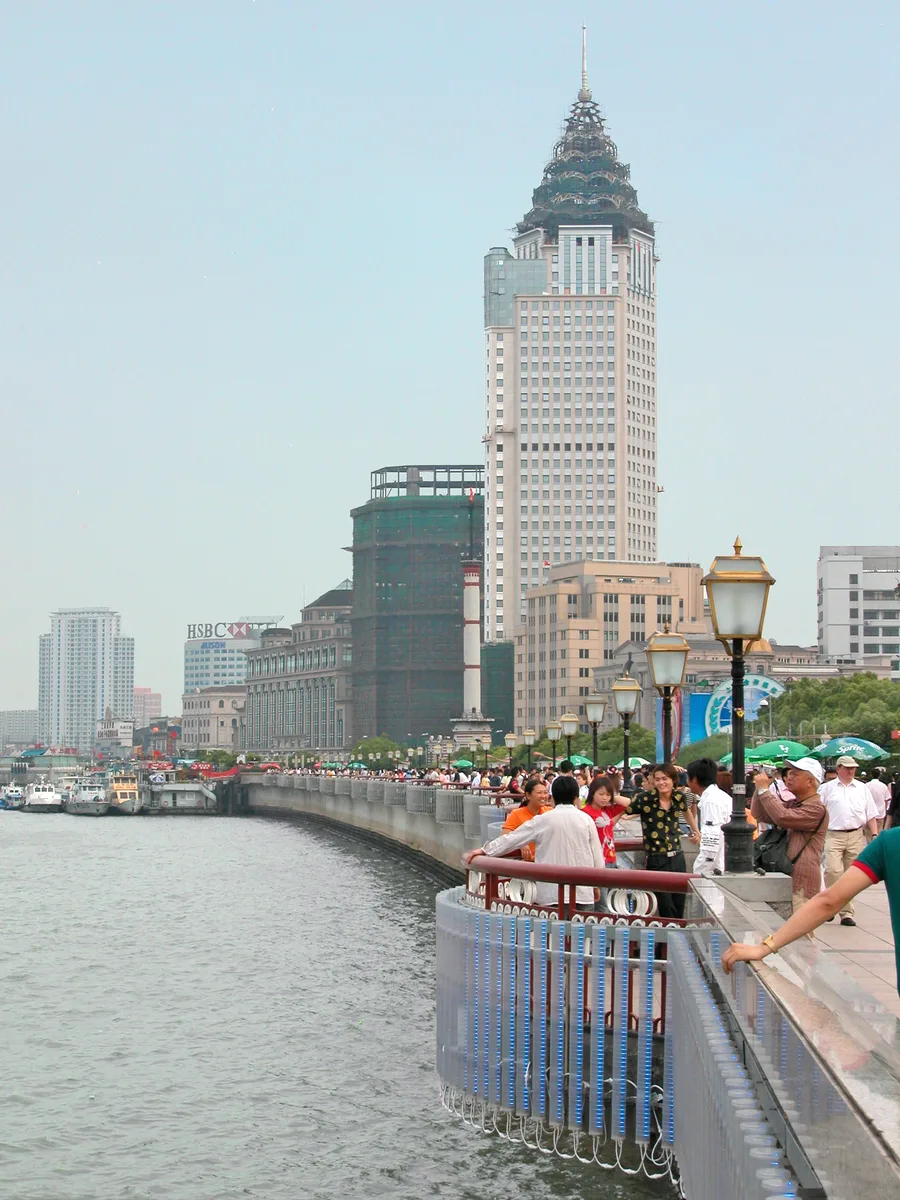
The Bund is a protected waterfront on the west bank of the Huangpu, with the newer skyline across the river. Former concession-era streets such as Wukang Road and Anfu Road are a neighborhood walk, not a single building to photograph. Yu Garden is a Ming-dynasty garden beside the old city’s temple quarter, in the same central district as the river. These are different Shanghais. They are not separate day trips out of the city.
_(40076675451).jpg)
Shanghai is not a city without history, and Beijing is not a city without a present. A first visit can still be the city itself: river, streets, and old city, without a monument consuming every morning. How to use those parts is in the Shanghai travel guide.
The number of days changes the answer
The city guides currently plan a first look at Beijing in about three or four days, and a first look at Shanghai in about two or three. Those are shapes for a coherent first visit. They are not minimum-stay laws, and they do not assign Shanghai to short trips and Beijing to longer ones.
A very short stop is easier to hold together in Shanghai. The river, one neighborhood, and the old city can still form a visit inside a small number of days. Beijing becomes easier to use well when the historic center and a Great Wall day each have their own space. Put both on one day and the trip no longer matches the reason for choosing Beijing.
The reason for coming still outranks the calendar. If the wall is why you came, a short stay is a reason to see less of Beijing, not a reason to switch cities. If walking the city is why you came, extra days are not a reason to add Beijing.
Shanghai has one clear exception. If Shanghai Disneyland is the reason for the trip, that resort sits outside the central neighborhoods and asks for a day of its own. That day behaves more like a destination block than like a walk between neighborhoods.
Think about what comes before and after
If your international itinerary already arrives in Beijing or Shanghai, that city is a natural anchor. Adding the other city creates another domestic transfer. If you depart internationally from the other city, an open-jaw itinerary can avoid coming back only to fly out.
If Hangzhou is already planned, Shanghai is the more natural of the pair. Shanghai and Hangzhou are directly connected by high-speed rail, so they can sit naturally in the same part of an itinerary. What to do in Hangzhou is a separate decision, in the Hangzhou travel guide.
If the trip is already built around Beijing’s historic sites, Beijing is the anchor. Shanghai then means leaving that part of the country for a different kind of city. Coming back only to depart adds a second domestic transfer. That return is the cost of adding a famous city at the end.
Train or flight between Beijing and Shanghai is its own decision. It sits in getting around China. If the journey is already long enough to hold both cities without thinning either one, you may not have to choose.
What do you lose by choosing only one?
Beijing alone leaves out Shanghai’s riverfront, its neighborhood walking, and the contrast between the older Bund and the towers across the Huangpu. That matters if the contemporary city is what you wanted to meet first. It does not spoil a Beijing trip chosen for the palace and the wall.
Shanghai alone leaves out the imperial palace as a first-visit day, and the Great Wall as an excursion based in Beijing. Another city on the route does not stand in for those two. If they are the reason for the journey, Shanghai does not replace them.
If you have enough time, visit both
The two cities are not the same first trip twice. One is organized around destinations that consume the day. The other is organized around moving through the city. Visiting both is not redundant.
It is also not free. Changing cities means hotel to station, security and waiting, the train, the next station, and the next hotel. The time on the ticket is only the middle. Beijing and Shanghai are linked by high-speed rail, and the ride does not remove the rest of that sequence. How the ride works is in China high-speed rail.
Visit both when the trip can keep each city’s shape and still leave enough time for the transfer. If the second city only fits by compressing the first until it no longer makes sense, stay with one.
Make the decision simple
Choose Beijing if the first days should be the historic center and the Great Wall, and you can give those separate time.
Choose Shanghai if the first days should be the city itself, especially on a short stay or when Hangzhou is already next.
Choose both if the journey can hold each of those shapes, and still spare the substantial part of a day that moving between them can consume.