Why these three places work together
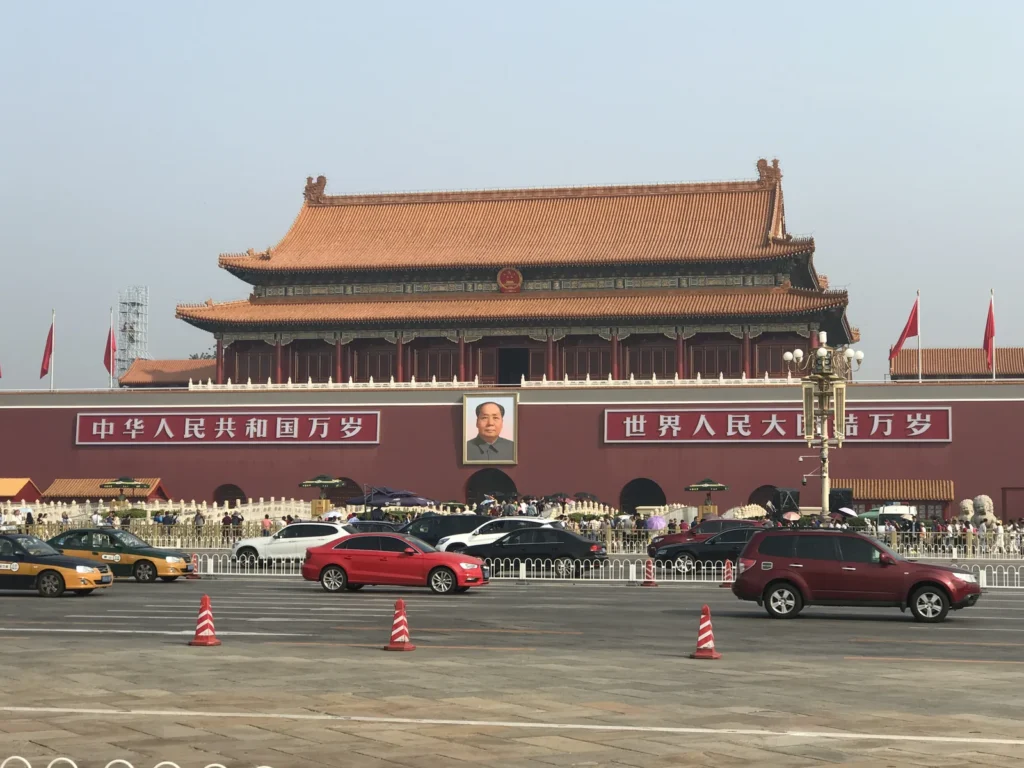
Photo: Jp16103 / Wikimedia Commons / CC BY-SA 4.0.

Beijing, Shanghai and Hangzhou work as one first route because the trip changes as you move. Beijing is where the large destinations set the day. Shanghai is a city you understand by moving through it. Hangzhou changes the scale again, and West Lake is the landscape the last base is there to hold.
The three places earn the route because each one changes the kind of day. They are not here as three famous names. Leaving one out makes a different trip.
Give the route enough time
The city guides already give each place a shape for a coherent first look: about three or four days in Beijing, about two or three in Shanghai, and about one or two in Hangzhou. Those figures describe time you can use in the city. They are not three numbers to add and call an itinerary.
Three plus two plus one is not this route in six days. Beijing still needs the historic center and the Great Wall kept apart. Shanghai still needs its own city time. Hangzhou still needs a real block at West Lake. Beijing to Shanghai takes part of a day, Shanghai to Hangzhou takes another piece, and the international arrival and departure take more. The hours on a ticket are only the middle of a move.
This is not a route to squeeze into the smallest possible number of days. Give it enough calendar space for the three city stays and the two changes of base without turning every arrival into another sightseeing block. A shorter calendar can still use the idea by keeping fewer bases. How calendar days differ from usable days is in how many days you need in China.
Start in Beijing for the large destinations
Beijing is here because the opening of the route is destination-led, not because it is the capital. Its job is the historic center, a Great Wall day, and, only if the time is actually there, one further major block of the city.
The Forbidden City, officially the Palace Museum, is the long visit in the historic center. Tiananmen, on the south side of that center, and Jingshan, the hill immediately north of the palace, belong with it. The Great Wall is a separate day, because it means leaving central Beijing: the ride out, time on the wall, and the ride back. Let Beijing be the part of the journey where the major destinations set the day. Where to stay, which section of the wall fits, and which reservation has to exist first are in the Beijing travel guide.
Move to Shanghai for a different kind of city
Shanghai earns the transfer because the days change. You leave a stay built around large destinations and arrive in a city you read by moving through it: the Huangpu and the Bund, one neighborhood on foot, the old city, and the skyline across the river.
Beijing is modern, and Shanghai has a long history of its own. The useful difference is how a first visit behaves, which is already the question in Beijing or Shanghai. On this route, the river, a neighborhood walk and the old city can belong to the same stay without each becoming a separate excursion. Shanghai Disneyland changes that shape because it asks for a day of its own. Leave it out unless the park is why you came. How those days fit together is in the Shanghai travel guide.
Finish in Hangzhou by slowing the route down
Hangzhou is useful after Shanghai because the scale changes. The large city gives way to a landscape-led base, and West Lake is that landscape: the water, the causeways and the hills as one place, not a circuit of viewpoints.
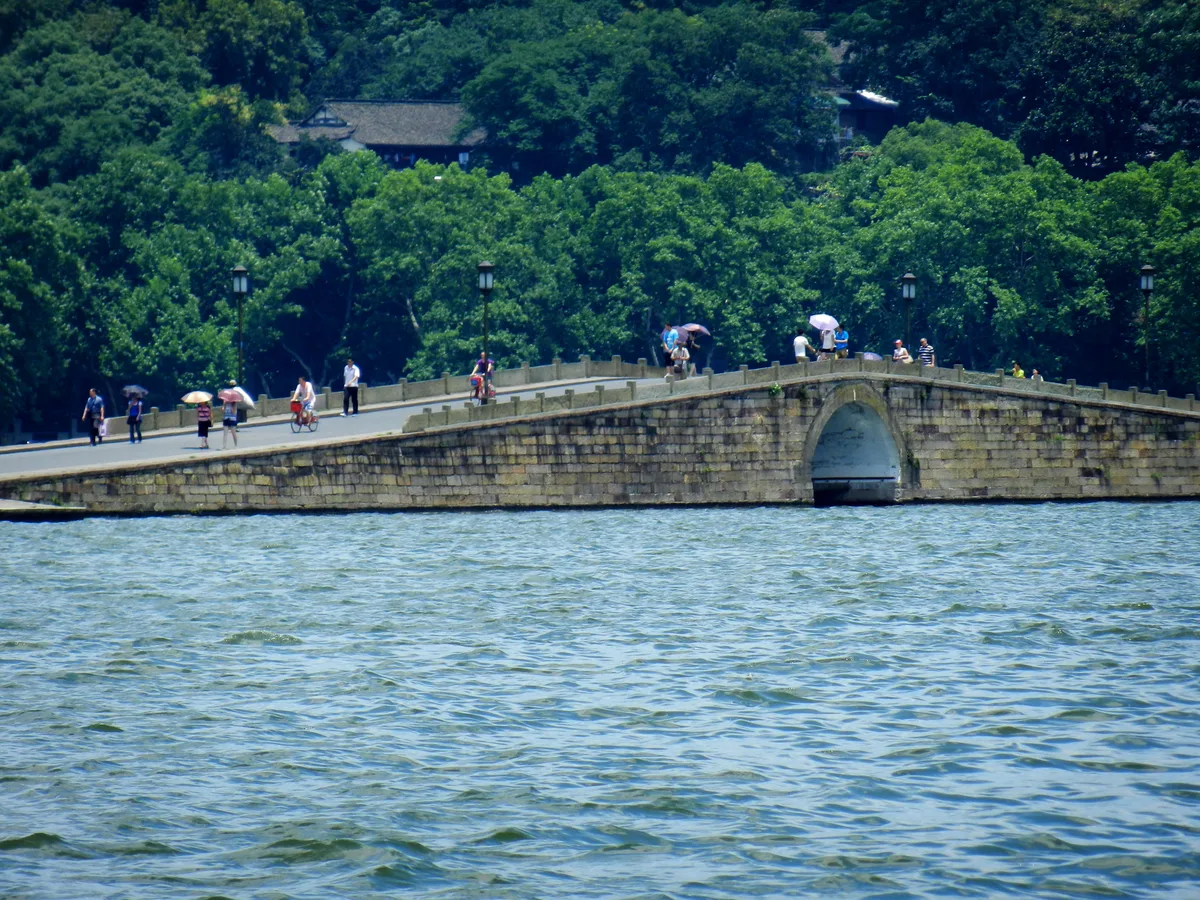

For a short stay, one stretch of the lake, given a real block of time, may be enough. With another day, Lingyin Temple can be the extra choice. It sits west of the lake, in the hills, and it is not another shore stop. Longjing, Xixi, the Grand Canal and Hefang Street do not improve the stay merely by being added. The lake and the main visitor areas can be busy, so this base is a change of pace and urban scale, not an empty shore. Which stretch to keep is in the Hangzhou travel guide.
The transfers are part of the route
Two moves connect the bases, and neither is spare time.
Beijing to Shanghai is a substantial intercity journey. Direct high-speed trains run on that corridor, including between Beijing South and Shanghai Hongqiao, and a flight is also a real choice. Compare hotel, station or airport, the wait, the train or flight, and the next hotel. That comparison is in train or fly in China.
Shanghai to Hangzhou is more contained. Direct high-speed trains connect the cities, including between Shanghai Hongqiao and Hangzhou East, but the station on the ticket is the one you have to reach. The shorter ride is still a change of base: checkout, the station, the train and another hotel. Once the ticket exists, the ride itself is in China high-speed rail.
Do not turn Hangzhou into a day trip by default
Shanghai and Hangzhou are close enough by rail that it is easy to turn West Lake into a day trip from Shanghai. That can be the right call. A day trip avoids another hotel, and it sends you back over the same corridor, so the day does not end in Hangzhou. Staying overnight costs a hotel change and gives Hangzhou its own evening and the next morning.
On this route, the overnight is what lets the pace change, especially when Hangzhou is already the last stop. If you only want a short look at the lake, keeping Shanghai as the base is reasonable.
Reverse the route when the flights make more sense
The route does not have to run Beijing, then Shanghai, then Hangzhou. If the flights work better the other way, reverse it, instead of crossing the country again only to preserve this order. Beijing and Shanghai both have major international airports. Hangzhou may or may not be a useful gateway for the flights you can buy. Draw the route before filling the days. That step is in how to plan your first trip to China.
Do not add another city just because the route looks short
These three bases are already doing three jobs. A fourth city means another transfer, another hotel and another arrival, and it takes time from the places already chosen. Add one only when it changes the trip in a way you specifically want. A famous name alone is a weak reason. The same test applies to a nearer city that would repeat a job already on the route. How to judge the extra base is in how many cities you should visit in China.
Who this route is for
This route fits a first visit that wants a major historic center, a Great Wall day, a large city experienced by moving through it, a landscape-led last stop, and rail-connected bases. It is less useful when the trip is very short, when Sichuan or a panda visit is the reason for coming, when southern China is the interest, or when you want one region rather than several bases. Nothing on this page makes it the default first trip.
Keep the shape, change the details
The useful part is not the number of nights. It is the change from one kind of trip to the next. Nights can move. Direction can follow the international ticket. Hangzhou can stay overnight or, for a short look at the lake, be a day from Shanghai. Beijing to Shanghai can be a train or a flight. Sights come off when they are not why you came. Keep the shape, and redesign the details around the trip you actually have.