A journey does not need a second hotel
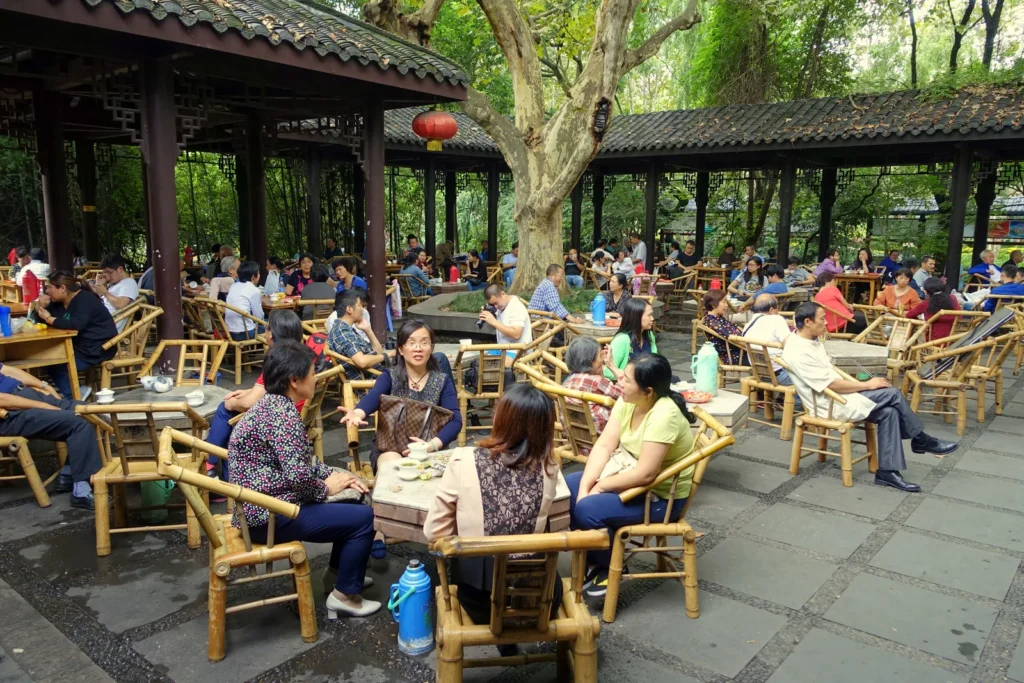
Photo: Daderot / Wikimedia Commons / CC0.

A first trip to China does not need a second city to become a trip. One hotel in Chengdu can still hold different days: the center, a tea house, food, a panda visit if you want one, and time that is not already aimed at a station.
Changing what you do is not the same as changing where you sleep. This is a decision about the route. It is not a claim that Chengdu stands in for the rest of the country.
One base removes more than the train ride
Leaving a city costs more than the ticket. The sequence is the hotel, the station or airport, the wait, the train or flight, local transport, the next hotel, and the time it takes to get oriented there. Between sightseeing days, a one-base trip does not run that sequence at all. It also removes the assumption that the trip needs another city simply to keep moving.
That is not the same as saying one base is always the more efficient trip. If another region is a reason you came, staying in Chengdu does not replace it. Whether another city earns a transfer is in how many cities you should visit in China. How much of the calendar you can actually use is in how many days you need in China.
Chengdu can change the day without changing the base
The days do not have to look the same just because the hotel does.
One kind of day stays in the center: People’s Park, a tea house you sit in long enough for it to be the afternoon, and a meal that is allowed to take the evening.
Another kind of day is the panda base. It sits outside the central parks and lanes, and it can take the main part of the day. You still return to the same hotel. If pandas are not why you came, that day can stay in the center instead.
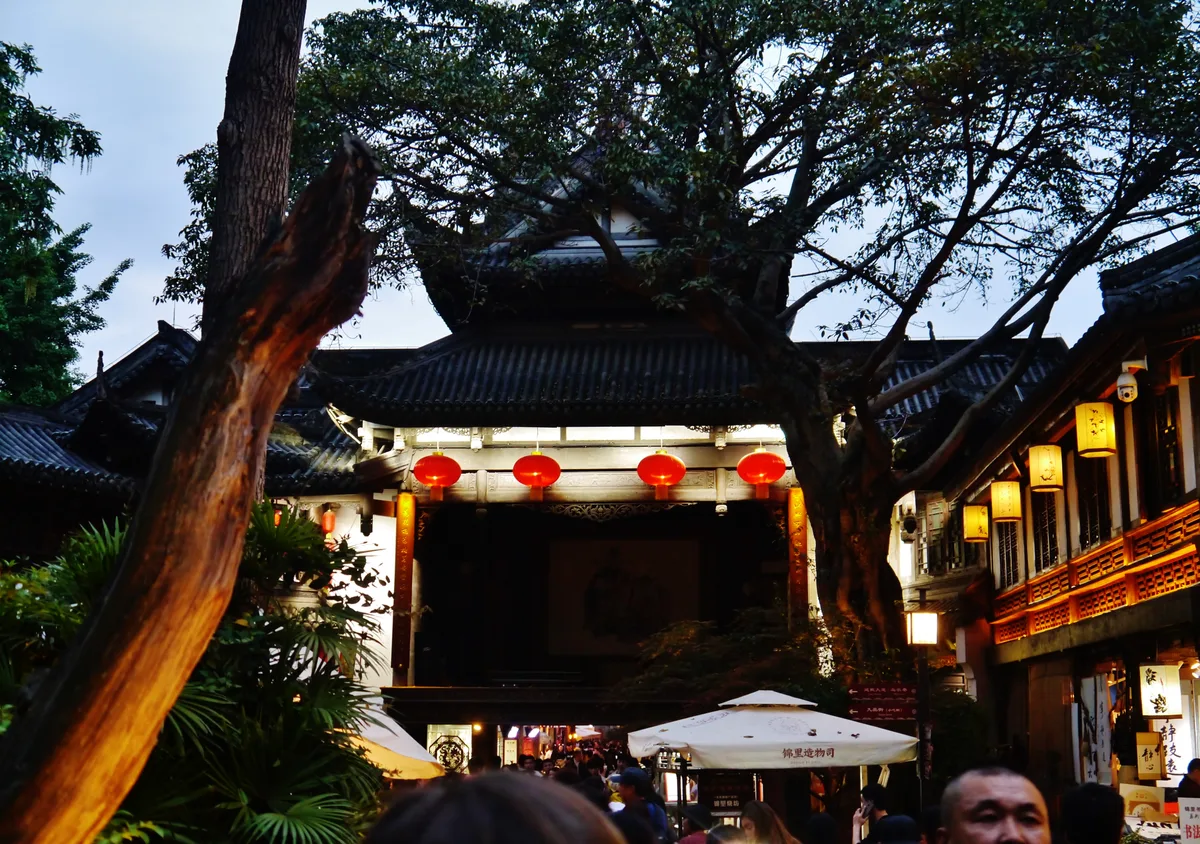

A further day can be one chosen part of the city, such as Kuanzhai or the side around Wuhou and Jinli, not both, and not a list of old Chengdu. How those choices work is in the Chengdu travel guide. They are kinds of days, not a schedule.
An excursion is not another base
A base is where the trip keeps coming back. An excursion is a long outing that returns there. You leave in the morning, use a large part of the day away from the hotel, and sleep in the same place.
The panda visit makes the distinction easy to see. It changes the day because it is not the central city, and it can use most of the hours you have. It does not ask for a second hotel. Distance from the hotel does not automatically create another base.
The saved transfer time needs somewhere to go
The hours you are not spending on a transfer are not a pile of empty slots for more sights. Fill every one of them with another gate and the planning problem has only moved indoors.
What that time can hold is a longer meal, a tea house that is actually the plan, a slower walk, recovery after you land, an evening with no departure to catch, or a return to a place you already liked. The point of removing a transfer is not to create another checklist.
Do not add another city to make the trip look complete
One city can look small on a page. That is not a hole in the plan.
Another city has to bring its own reason. It also brings another transfer, another hotel, another arrival, and less time in the place you already chose. Do not add it so the trip looks more finished.
One base only works when the city has enough jobs
Staying in one place works when that place can hold several things you actually want. For some travelers Chengdu can: Sichuan food, time in a tea house, a panda visit, the neighborhoods, and a stay that is not organized around the next checkout.
Fewer transfers are not a reason to spend more days somewhere you do not especially want to be. If those are not your reasons, a long stay here is not the efficient version of the trip.
Know when the second city has earned the move
Add a second city when it gives you something you specifically want that this base cannot give you. An unused day is not that reason. Neither is a fast train, a famous name, or the fact that someone else’s itinerary includes another stop.
The next place has to change the trip enough to justify changing hotels. That test is in how many cities you should visit in China.
Who a one-base Chengdu trip is for
This model suits someone who wants Chengdu itself: the food, time in the city, and, if it matters, a panda visit that does not turn the trip into a national list. It also suits a shorter trip, a first arrival where you would rather settle into one place than immediately plan another move, and a preference for not changing hotels.
It fits less well when another region is a main reason for coming, when you want the geography of the trip to change, when Chengdu is only a mild interest, or when the trip is long and you already want a distinct second region. No length of stay makes a second city obligatory.
Stay because the city still has work to do
Stay while this base is still doing the work the trip was built for. Move when another place has earned the transfer.
Stay because the city still has work to do, not because moving is difficult. Move because the next place changes the trip, not because the itinerary looks empty.