The route works because the last move is deliberate
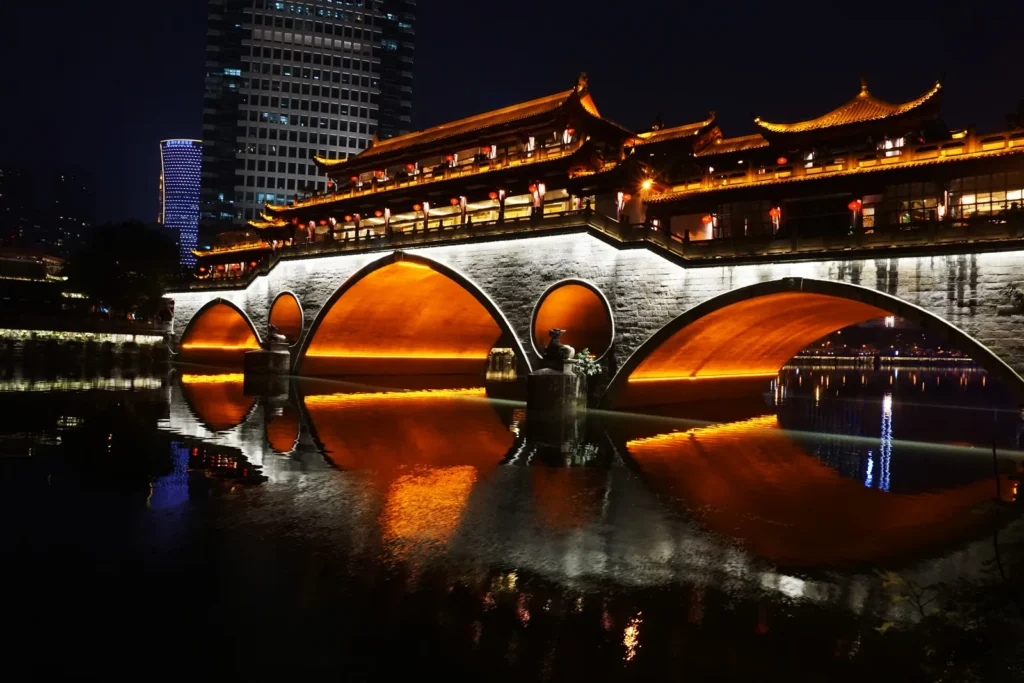
Photo: tyrosin / Wikimedia Commons / CC BY 2.0.

Shanghai and Hangzhou make a geographically easy pair. Chengdu does not continue that line. It earns the last part of the journey only when Sichuan is one of the reasons for the trip.
Shanghai is the large urban stay. Hangzhou is the change of scale around West Lake. Chengdu is another region: the city, its food, time in a tea house, and a panda visit only if that visit is something you actually want. A Shanghai, Hangzhou and Chengdu itinerary is not three famous places in a row. It is two kinds of move. The first stays in the east. The second leaves it on purpose.
If the three-base trip you want stays in the east and opens in Beijing, that is a different route, in Beijing, Shanghai and Hangzhou.
Keep Shanghai and Hangzhou together
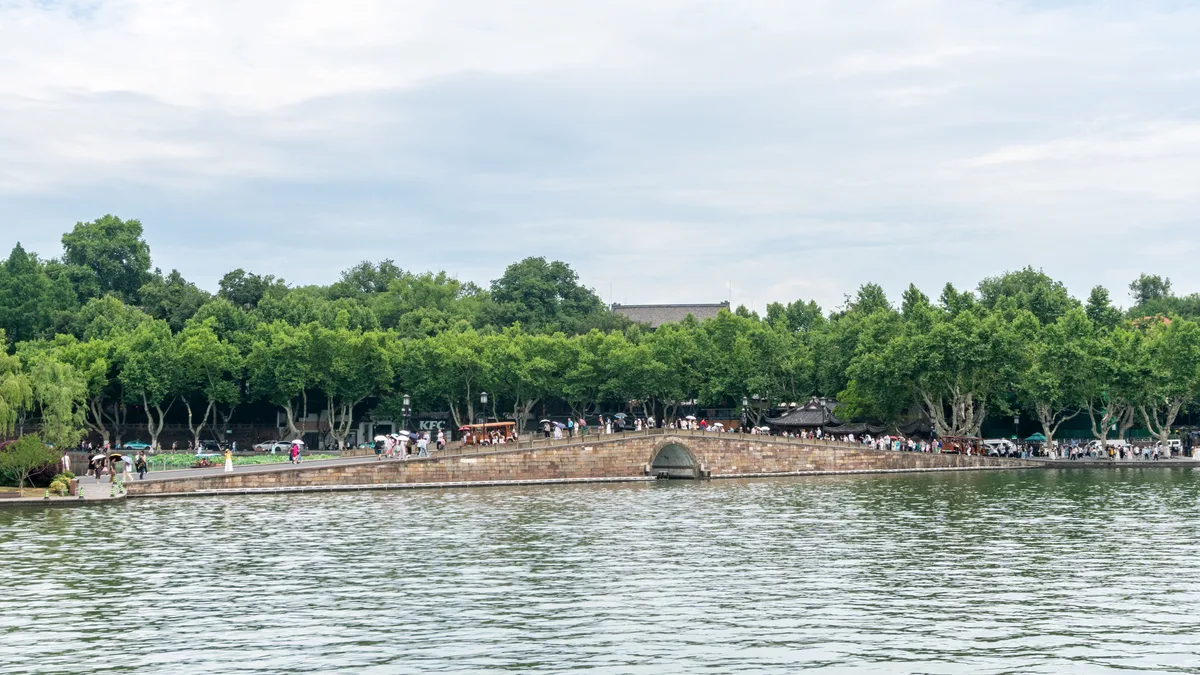

The first half stays geographically compact. Direct high-speed trains connect Shanghai and Hangzhou. Shanghai is where the larger city stay belongs: the river, neighborhoods, the old city. Hangzhou follows because West Lake changes the scale. The transfer is real, from hotel to station to the train to the next hotel, and it is still a contained move, not a change of region.
How to use Shanghai is in the Shanghai travel guide. What to keep at the lake is in the Hangzhou travel guide.
Chengdu has to earn the longer move
Chengdu is not the next nearby stop. It does not earn the journey because it is famous, because pandas appear on a list, because a day looks empty, or because another pin would look good on the map.
It earns the move when you want Sichuan as another region: the city’s food, a tea-house rhythm that is not a stop between gates, or a panda visit. Those are reasons, not a set you have to complete. If pandas are not why you came, the days in Chengdu can stay in the center. The Chengdu travel guide is where that first look is set out.
Chengdu has to be the reason for the long move. An easy fare is not that reason. How to judge whether another city earns a transfer at all is in how many cities you should visit in China.
Treat the move to Chengdu as part of the trip
The leg out of eastern China is a different decision from Shanghai to Hangzhou. Check the direct train and flight options that actually exist for your travel date and departure city. A route that works from Shanghai is not automatically the route you would choose from Hangzhou, and the station or airport on the ticket is the one you actually have to reach.
Compare the whole sequence on the date you are actually traveling: which direct train or flight exists, which station or airport it uses, the ride from the hotel and to the next one, what you are carrying, and what part of the day is left when you arrive. Neither mode wins in general. What kind of distance this is sits in getting around China. The door-to-door choice is in train or fly in China.
Do not make Chengdu a one-night reward
If the route makes a move into another region, Chengdu needs enough time to be a stay. The city guide puts a first look at about two or three days. That is not a rule of three nights. It is enough for the center to be a real day, with food and a tea house you actually sit in. A panda visit, if you want it, takes the shape of its own day because the base sits outside the center. Arrive, see the pandas, eat hotpot, and leave is two famous stops with a long transfer wrapped around them. That shape makes the move harder to justify.
Shanghai’s first look is about two or three days, and Hangzhou’s about one or two. Those shapes are not a sum, and they do not include the flight in, the flight home, the short move, or the long one. How to count usable time is in how many days you need in China.
The route does not need another western stop
Getting to Chengdu does not oblige you to keep moving through another chain of cities. Chengdu can be the last base.
Use the international ticket to decide the direction
The route does not have to run Shanghai, then Hangzhou, then Chengdu. You might land in Shanghai, go to Hangzhou, then Chengdu, and fly home from there. You might start in Chengdu and finish in Shanghai. Look at the international flights you can actually buy for your dates and the city you are flying from. If arriving in one city and leaving from another removes a trip back across the country only to fly out, that ticket is worth looking at. It is not always cheaper, and Chengdu is not automatically a useful international gateway for every home airport.
Draw the route before filling the days. That step is in how to plan your first trip to China.
Drop Chengdu when the reason is weak
If what you want is Shanghai and West Lake, stop there. Do not add Chengdu because the calendar still has days in it. Those days can stay in the east: a slower Shanghai, a second day at the lake, or a nearby choice that does not leave the region.
If Sichuan is not one of the reasons you came, the long move has not earned its cost. The cost is the transfer itself, and the time it takes out of the places you already wanted.
Who this route is for
This route suits someone who wants Shanghai as a real urban stay, West Lake as a change of scale, and Sichuan strongly enough to make one long move, without turning the trip into a national list. It fits less well when the trip is short, when Sichuan is only a mild curiosity, when long transfers are what you are trying to avoid, or when the east already holds what you came for.
One long move is enough
Shanghai and Hangzhou give this route a continuous first half. Chengdu is a deliberate break from that geography. The break is worth making when Sichuan is part of the trip you wanted. It does not need to become the start of another chain of cities.