Start with the distance, not the transport app
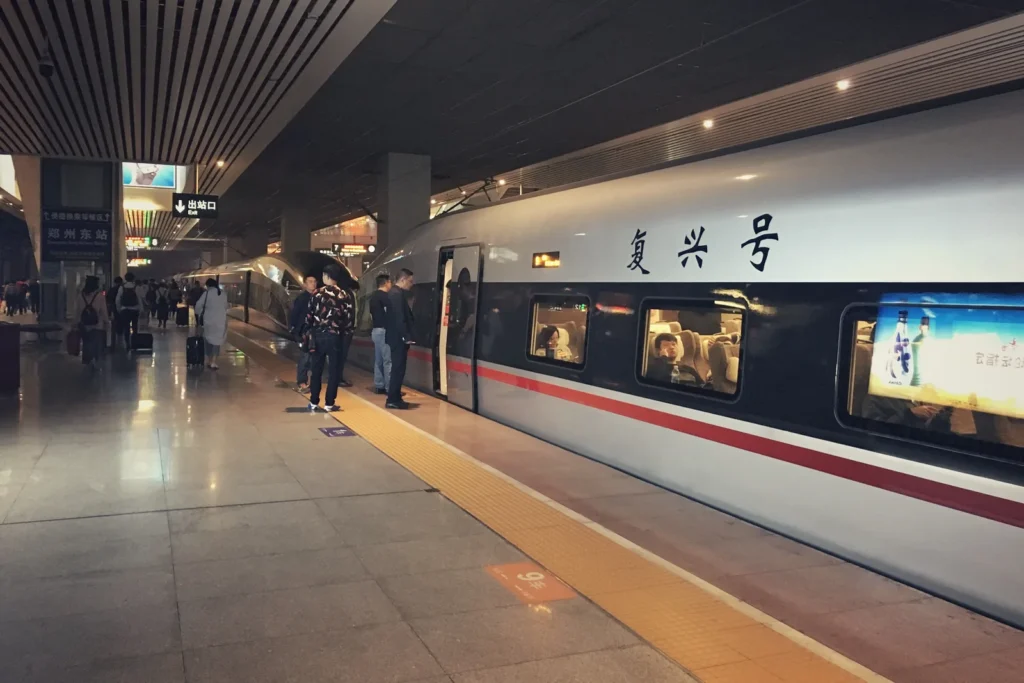
Photo: Windmemories / Wikimedia Commons / CC BY-SA 4.0.

Getting around China is a smaller decision than the network suggests. You do not need a working map of every train type, city bus, and bike-share app before a trip makes sense. You need to know which way of moving fits the distance in front of you.
Three trips show the split. Beijing to Shanghai is a journey between cities. A hotel to the Forbidden City is a journey inside one city. An airport to a hotel is an arrival, and it behaves like neither of the other two. The same phone can be in your pocket for all three. That does not make them the same choice.
Between cities, the useful pair is high-speed rail and domestic flights. Inside a city, the metro does most of the distance, and a ride-hailing car or a taxi finishes the trips the metro does not. Walking is for a neighborhood. It is not how you cross a Chinese city.
Apps come after that choice. A rail account, a metro code, and a ride app are how you carry out a decision, not how you make it. Which of those to set up before you fly sits with the short list of apps a first trip actually needs. This page is the choice itself.
High-speed rail is the default for many city pairs
For a lot of trips between major cities, the high-speed train is the straightforward way to go: city to city, without a ride out to an airport and back. People also say “the train” when they do not mean a high-speed train. Slower conventional services still run, including on corridors that have fast trains too. Read the journey time, not just the fact that a railway ticket exists. If the only rail option turns the day into an endurance test, a flight is allowed to win.
Stations are often nearer the part of the city you are staying in than the airport is. Often is not always. Some high-speed stations sit on the edge of town. A fast train into a remote station is a different trip from a fast train into the district where you are sleeping. Where that station sits, relative to the hotel and the next thing you are doing, belongs in the decision.
The station name has to be exact, because Chinese cities regularly have more than one. Similar English names are not the same place. Beijing Railway Station and Beijing South are different stations. Shanghai Railway Station and Shanghai Hongqiao are different stations. Choosing the wrong station can put you in the wrong part of the city before the journey starts. Match the Chinese name on the booking to the Chinese name you saved. A shortened English label is how the mix-up happens.
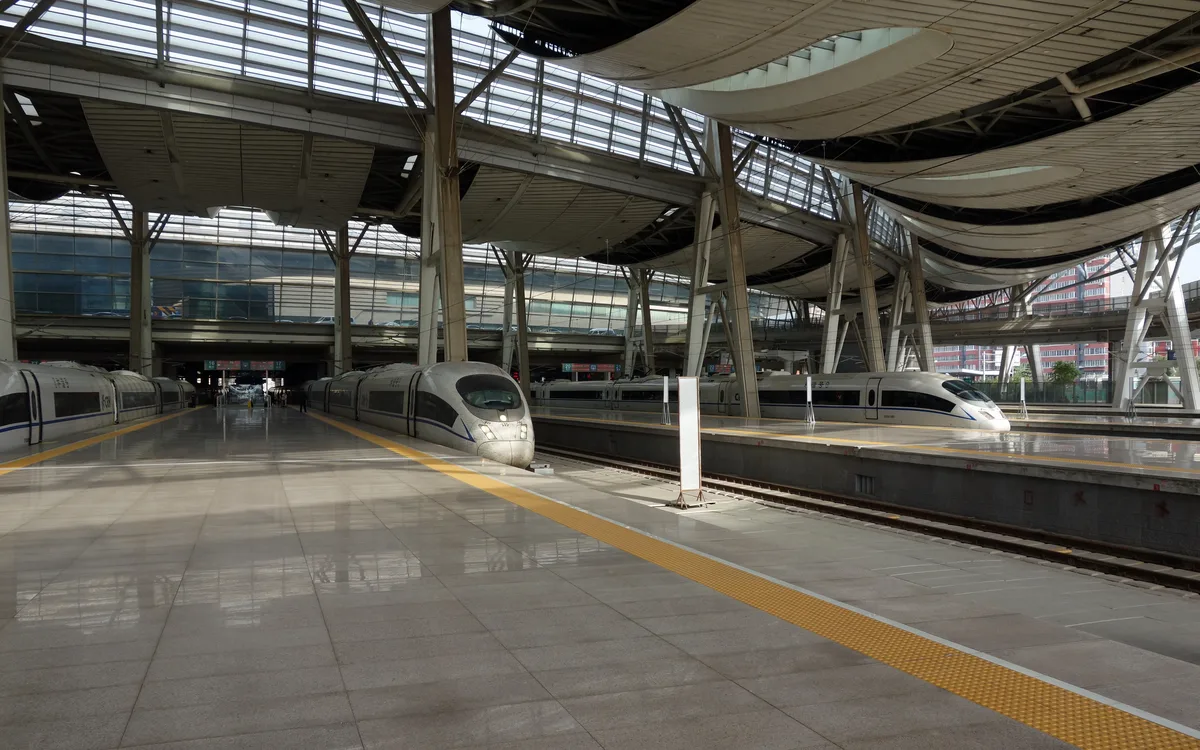

The ticket is tied to the passenger. Foreign passengers can buy real-name rail tickets with a valid passport. The English 12306 site accepts only a valid foreign passport. For an e-ticket, show the identity document used to buy it when you enter the station, board, and leave. A printed itinerary is not a ticket. On 12306, a registered user can buy when their identity information is verified, or ready to be verified. Enter the name and document number accurately. The document rules are on 12306’s English FAQ.
Seat types, the day tickets are released, changes, and refunds are a separate task, and they move often enough that a general page should not freeze them. If this trip has a train, learn that train. What the ride itself looks like, from the station name to the gate, is in China high-speed rail. You do not need the rest of the ticketing system first.
Flying still makes sense for longer distances
China is large enough that rail is sometimes the wrong default. A cross-country trip can take most of a day on the rails and still be a short time in the air. Compare the whole journey, not the number printed next to the flight: rail time from station to station, how far each airport is from where you start and where you need to be, check-in and security, whether a flight runs when you need it, luggage, and what a delay does to each plan. There is no hour at which the train always wins, and no distance at which the plane always does.
A four-hour train can still be the calmer day once you add the ride to the airport, the time you have to be there, and the ride in from the other airport. A much longer rail day can lose to a flight even after that overhead. Beijing to Shanghai is the kind of pair where both exist, so the answer is about your door-to-door day. It is not a rule you can copy onto every other pair.
The map can also flip the usual assumption. People treat “flight” as if it always means a long transfer at both ends. At Shanghai Hongqiao, the airport and a major high-speed station sit beside each other, so that penalty is smaller than it is when you fly into an airport on the far side of a city. Another city’s main airport can undo a short flight before you have done anything you came for. Look at the actual airports and stations on your ticket. Do not borrow the transfer from a different city.
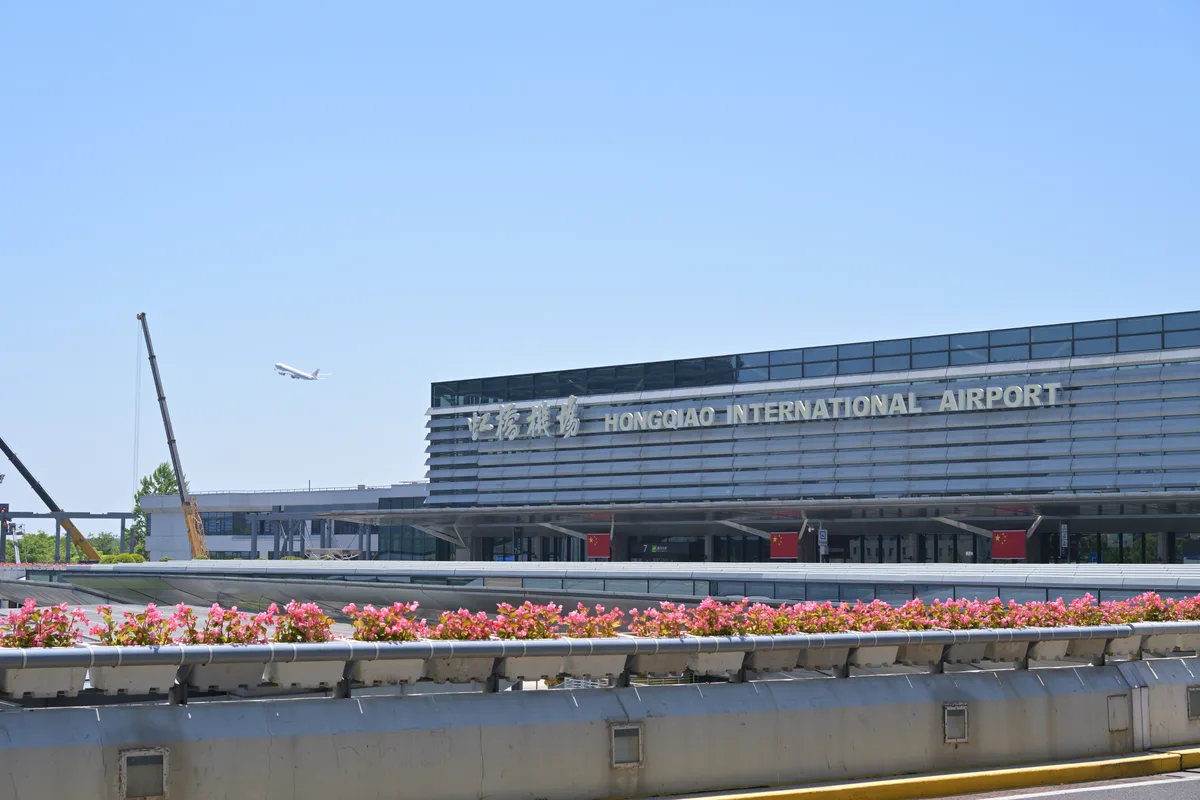

Foreign visitors book domestic flights with a passport. The name and the document on the booking have to be the ones you show at check-in, security, and the gate. Carry that passport, not a different card you happen to have in a wallet. Civil aviation guidance on travel documents is where that match is set out. Buy from the airline, or from a seller you already use and can reach if the flight changes. This guide does not rank carriers. Baggage, check-in deadlines, and change fees differ by airline and by ticket, so they do not belong here as one national rule.
Inside a city, the metro usually does the heavy lifting
Once you are in a major city, the metro is usually the simplest way to cover real distance. It does not sit in traffic. The stops have names you can match to a map. In the cities where a first trip tends to spend its days, you can often ride without negotiating anything. That is the job. You do not need a separate mastery of every metro in the country before the first one. What the first ride involves, from the code to the exit, is in how to use the metro.
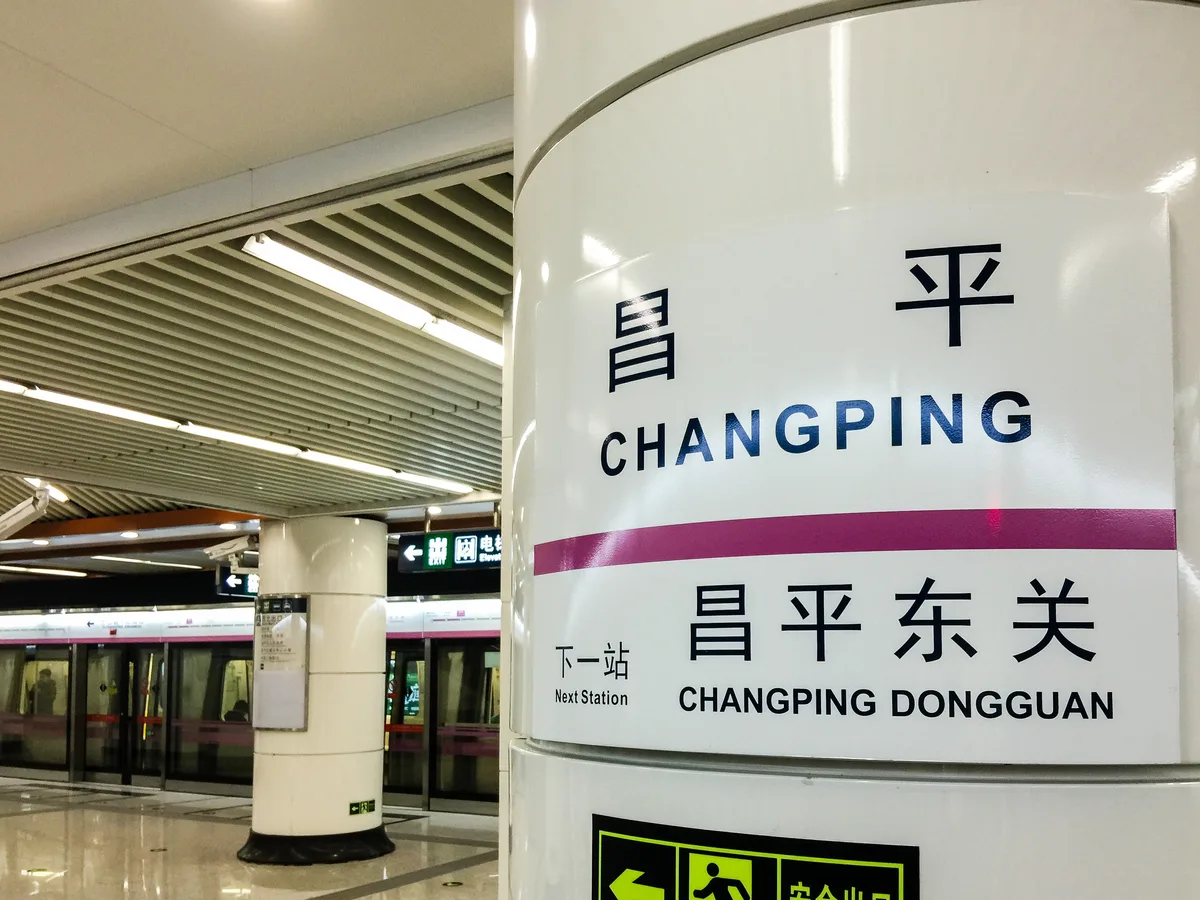

In those cities, station signs and ticket machines often include English. Beijing’s machines have an English screen, which is documented on the city’s own subway ticket guidance. Treat English as a fair expectation in the main visitor cities. Do not treat it as a promise about every system. If the machine in front of you is Chinese-only, look for a staffed window. Stations do not all sell that ride the same way.
Payment is where a national shortcut fails. Where a station offers it, a single-journey ticket from a machine or a window does not depend on your apps. In many cities a transport code inside Alipay also opens the gate, after you select that city and pass an identity check. The code belongs to the city you selected. It is not one pass for the whole country, and a code you used in the last city may not be the one this gate wants. In some large cities an overseas bank card can be tapped at the gate as well. That is not nationwide. If a gate does not take your card, look for a single-journey ticket at that station. Systems differ. Visitor payment options are summarized in official guidance for foreign travelers. The signs at the station you are in outrank a general page.
In the major visitor cities, plan on a bag check before the platform. Rush hour changes the ride even when you already know the line. A trip that is easy late in the morning can be a packed platform at the start of the workday. The metro is often still the right choice. It is no longer a quiet one. If you are traveling with several people and full luggage, a car can be the kinder door-to-door ride even where a metro line exists. The metro did not stop being useful. It stopped being the whole answer.
One more limit: the metro exit is not the hotel door. Many stays still need a walk, or a short car, after you get out. Build that last piece in before you describe the day as “just a few stops.”
Ride-hailing and taxis fill the gaps
Use a car when the metro does not reach the place you are going, when luggage makes the metro a poor idea, or when you arrive late and the metro has thinned out or stopped for the night. Hours differ by city, so do not assume a line that ran in the afternoon is still the plan at midnight. Have the car ready as the late option before you are standing outside with the bags.
That car is not always a taxi. Ride-hailing is a car you request in an app, to a pickup point the app defines. In mainland China that is typically a DiDi app, or the ride option inside Alipay or WeChat. Those are separate entries. The DiDi Travel app can be registered with an international phone number and a bank card, which is what the 2026 official guidance for foreign travelers states. Which listing to install, and how not to download a similarly named app that does not dispatch cars here, is already in essential apps. This page does not repeat the setup. What the first ride involves, from the pin to the plate, is in how to use DiDi.
The pickup pin matters more than the neighborhood. Airports and large stations send cars to a specific door, level, or curb. “The terminal” is how drivers and passengers miss each other. Look at the pin before you leave the arrivals hall, and give yourself time to walk to it. If the pin is wrong, fix it before you request the car.
A taxi is the car at a rank, or one you hail at the curb. You do not have to use an app to leave an airport. A marked queue is a normal way out, and it is the right fallback when the app will not verify, the payment fails, or the phone has no signal. What helps in either car is the destination written in Chinese, saved where you can show it with the data off. Show the name and the address. A district and a description are how rides end in the wrong place.
The two are easy to blur, because a ride-hailing app can also call a taxi, and a taxi feels like “just a car.” If you care about a preset fare and a pin on a map, you are in ride-hailing. If you are in a marked queue with the hotel on your screen, you are in a taxi. Either can be the right last mile. Neither is a reason to cross the city by car when a metro already does that cleanly.
Stations and airports are part of the journey
A railway station is not a platform with a train beside it. At a large station the trip inside the building is its own sequence: the correct station, the identity document you booked with, security for you and your bags, the right waiting area, then a boarding window. The walk from the metro exit or the drop-off curb to that gate can be long. High-speed trains board and leave on a tight pattern. There may be a queue at security, at the document check, and at the gate.
Do not treat the departure time as the time to arrive at the station. Security, the document check, finding the waiting area, and boarding happen before the train leaves. Ticket sales and ticket checks stop before departure. How long before is in that station’s announcement. A departure at 09:00 is not an instruction to walk in at 08:55. Arriving early and waiting is cheaper than learning the building on a connection you cannot miss.
Airports add a different overhead, and it starts in the city, not at the gate. The ride to the airport is part of the flight. So is check-in, security, and the distance between the door you entered and the door of the plane. A domestic hop with a short time in the air can still cost the morning once both airports are included. Know which airport is on the ticket. In a city with more than one, they are not interchangeable, any more than railway stations are.
The same gap exists when you arrive. The train or the plane getting in does not deliver you to the hotel. Someone still has to leave that specific station or terminal by metro, ride-hailing, or taxi. Decide that leg while you still have a table and a connection, not at the exit with the bags and a dying battery.
What about buses, bikes and walking?
You do not need them to have a working trip.
Long-distance buses matter on some routes the railway serves badly, or not at all. They are a gap-filler for a specific journey, not the system to learn before you have taken a train. If your cities are already on the high-speed network, you can ignore coaches until a particular town forces the question.
City buses can reach places the metro does not, but they usually require more local route knowledge. They are a poor project for the morning you land.
Shared bikes can add app and payment setup that many short trips do not need. They are not how you cross a city, and they are not something to sort out before you have a ride from the airport.
Walking is the right way to be in a neighborhood, a historic area, or the blocks between a metro exit and a door. It is a bad plan for “just going across town.” Distances on a Chinese city map are often longer than the same gesture on a map at home. Keep the map you already chose, and the address in Chinese, for the moment walking stops being the point.
Prepare the first journey before you arrive
Prepare one journey. Not every mode in the country.
Know the exact station or airport, in Chinese and in English, and know which of the city’s stations or airports it is. Keep the passport you will travel on where you can take it out without unpacking. Save the booking where it opens with no signal. Save the hotel name and address in Chinese the same way. Decide which ride you will use for the last leg, and which payment method that ride actually accepts. Then add more time than the optimistic map for the transfer at each end.
The phone has to work when you need the map, the pin, and the ticket. How to keep a connection alive after you land is in internet for the trip. How payment, a working phone, and the first hour fit the rest of the arrival is in what to prepare before you go.
If that first leg is clear — the right station or airport, a document that matches the ticket, and a way to the hotel — the rest of the transport system can wait until the next journey needs it.