Give Chengdu two or three days
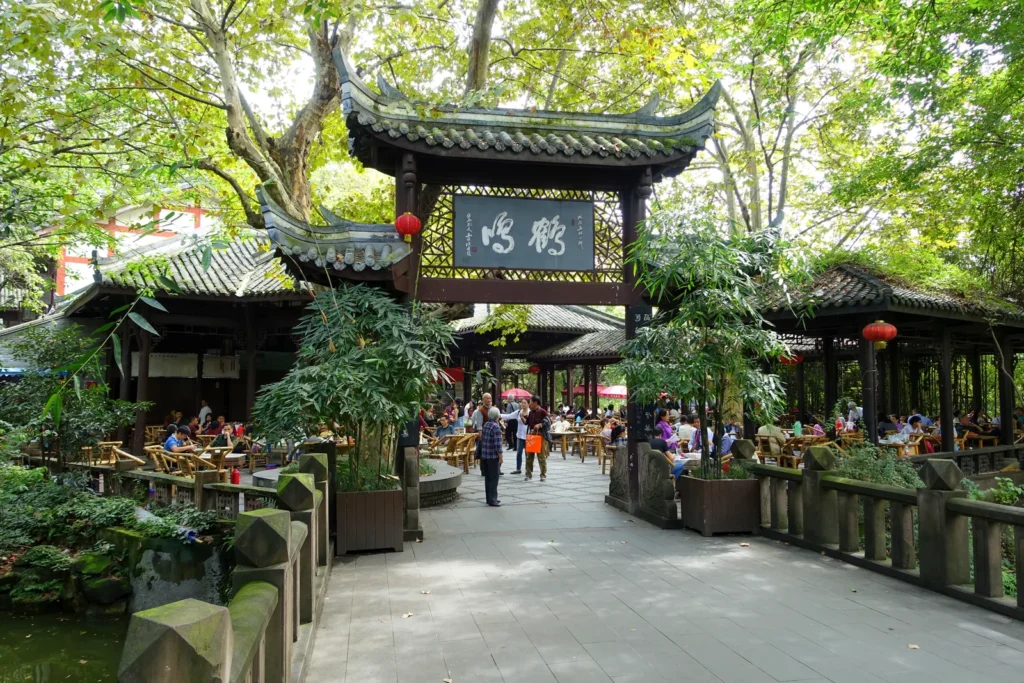
Photo: Daderot / Wikimedia Commons / CC0 1.0.

For a first visit, give Chengdu two or three days. Two days can hold a panda visit, if that is a reason you came, and the center of the city: a park, time in a tea house, and a meal with space around it. In that shape, the base owns one day and the center owns the other. Three days lets the center have a morning that is not already assigned. Use it to stay with a place you liked, or to add one stop. Do not use it to reopen the list. The extra time is the point of that day. It is a strong first look. It is not a tour of the whole city.
The famous names look small on a list. They are not small in a day. If pandas are not the reason for the trip, these days can stay entirely in the center. Do not add the base out of a sense that Chengdu requires it. Leshan, Dujiangyan, and Qingcheng are separate excursions. They do not fit inside these days.
Plan the pandas, then stop planning so tightly
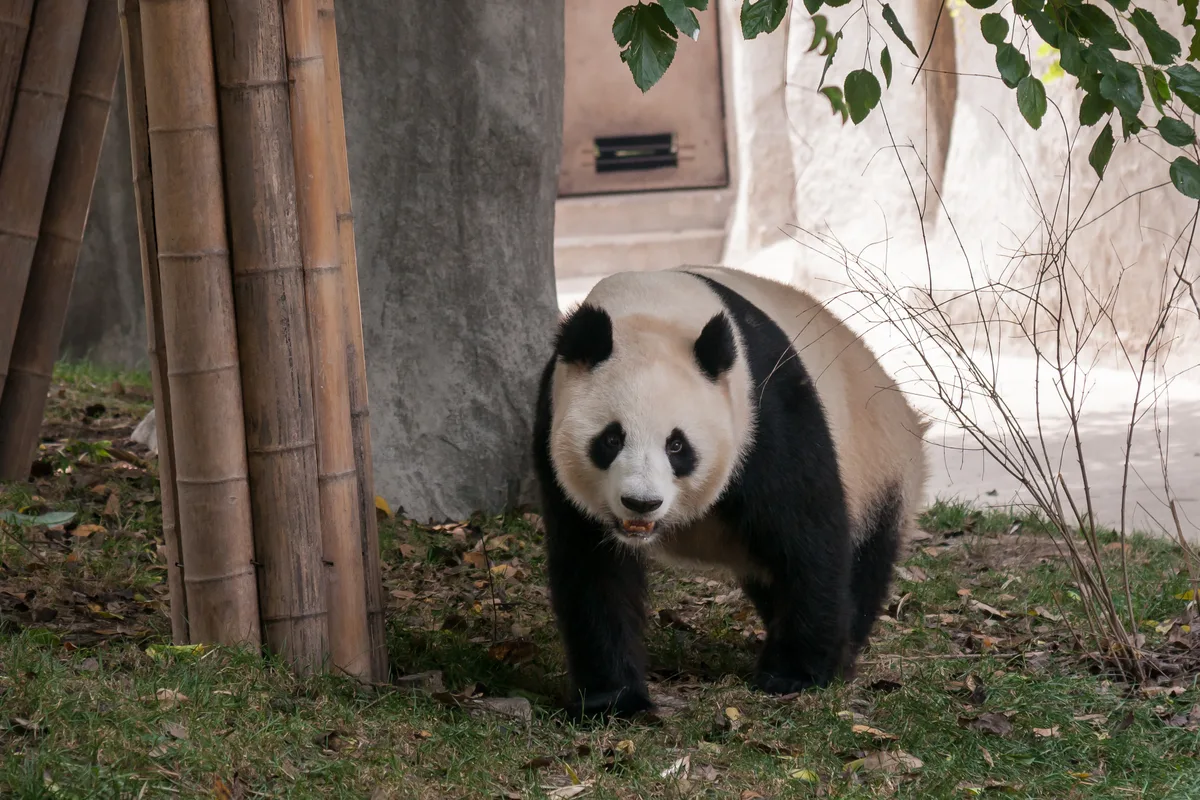
If giant pandas are a major reason for the trip, arrange that part before you fill the hours around it. The Chengdu Research Base of Giant Panda Breeding sits in Chenghua, not in the central parks and lanes. The base uses real-name ticketing and generally requires visitors to reserve online. A passport is one of the accepted identity documents for entry. Secure the visit. Then leave the rest of the day some air.
The base is a ride from the center, by metro or DiDi. A panda visit and the trip back already give the day its main structure. Tea and dinner belong to the other hours, not to the gaps in a panda schedule. Do not clip a second famous street and another ticketed site onto the same afternoon. What the animals are doing will vary. Plan the visit. Do not plan a promise about how they will behave.

Give a tea house more than twenty minutes
A tea house is the activity, not a drink between gates. If you sit down, let sitting down be the point. The useful pause in Chengdu is a seat and a pot, with no next gate already booked.
People’s Park, in central Qingyang, is a practical place to do this. Heming Teahouse sits inside the park. You do not need that particular table. You need long enough to stay. Order, sit, and let the park be the rest of the plan for that part of the afternoon. Twenty minutes turns the tea house into another stop. Give it enough time that sitting there is actually part of the afternoon.
Choose one version of old Chengdu
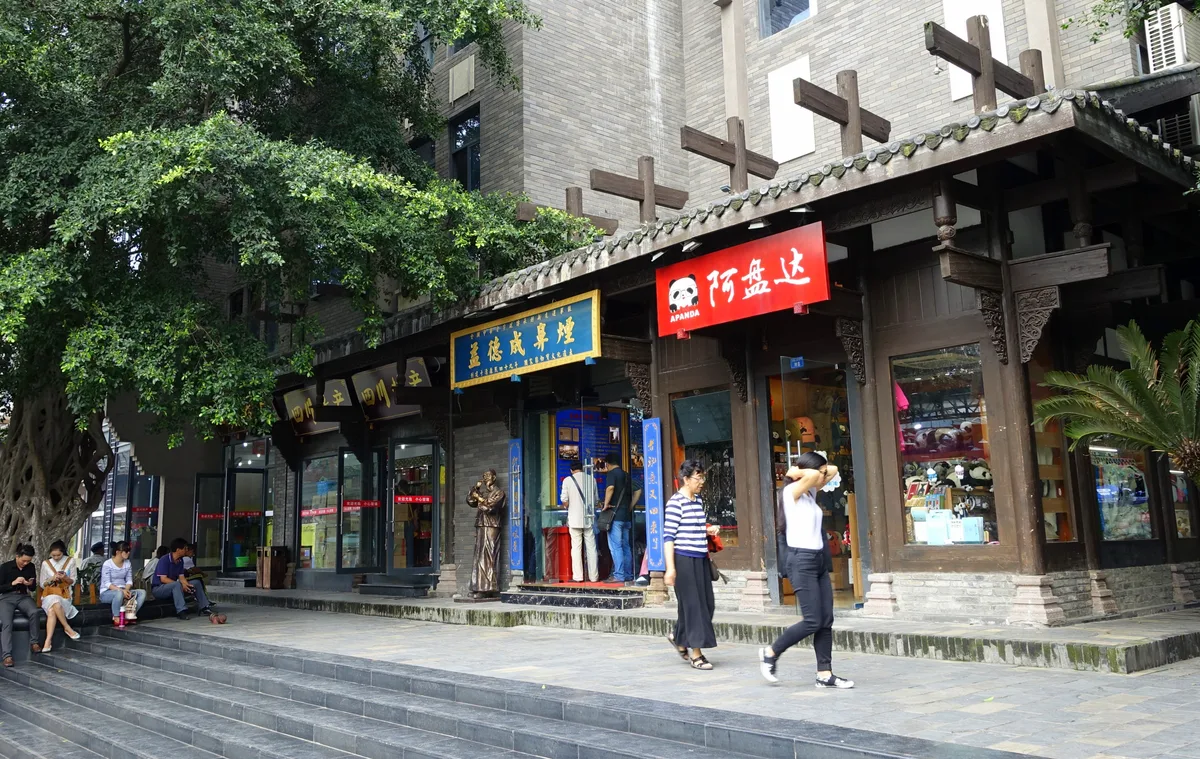
Kuanzhai Alley and Jinli are both managed visitor streets. Either can be a pleasant hour. A short first visit does not need both as proof of old Chengdu.
Kuanzhai Alley is a lane district in central Qingyang, on the same side of the city as People’s Park. It is the easier add when you are already there for tea. Jinli is the street immediately beside Wuhou Shrine. The street itself is free to walk. It is a visitor street of shops and performance beside the shrine, not a substitute for it. Go there when Wuhou is the reason for that part of the day.
For a short first visit, one is enough. Park and tea point naturally toward Kuanzhai. Wuhou Shrine points toward Jinli. Doing both, on top of the panda base, is how two days turn back into a checklist.

Let food take the evening
Hotpot is already the evening. It is a long meal at a table, not an item you clear before the next sight. Sichuan cooking is wider than hotpot, so the earlier meal can be something else entirely. You do not need a list of famous dishes, and you do not need a ranking of restaurants. Give the night to the meal you chose, and leave the table when you are finished, not when another gate is about to close. Another attraction after hotpot will not improve it.