The simplest payment setup for a trip to China
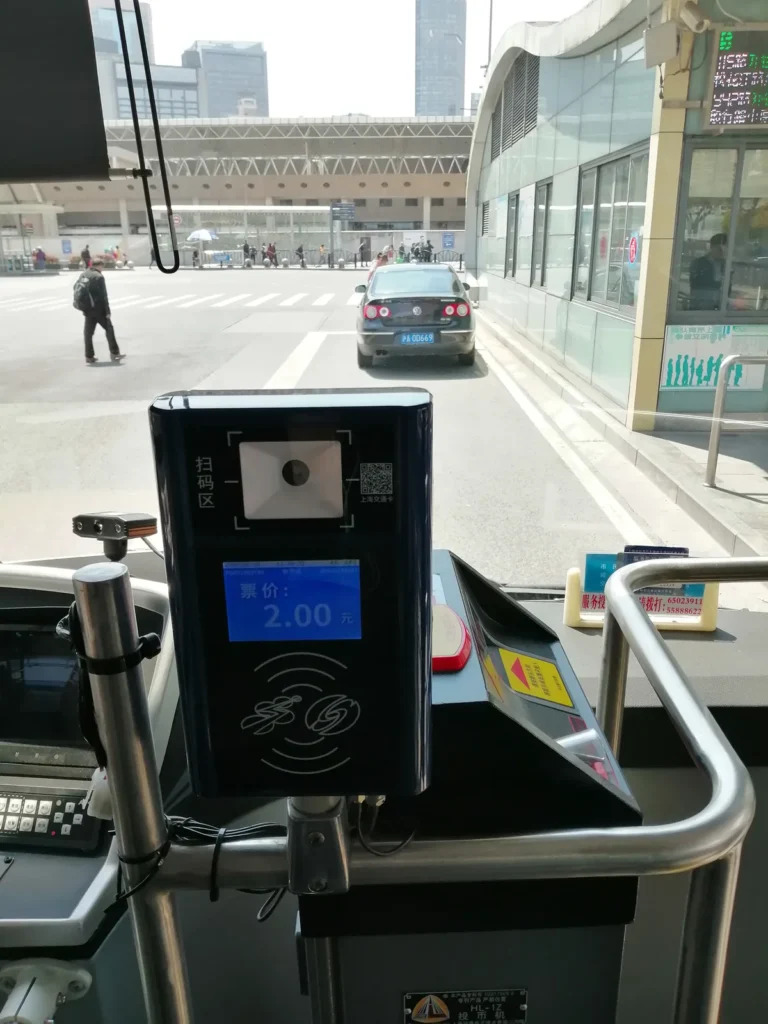
Photo: Shwangtianyuan / Wikimedia Commons / CC BY-SA 4.0. A fare reader on a Shanghai bus.

For most visitors to mainland China, prepare three ways to pay, in this order: a mobile wallet with an eligible international card, the physical card itself, and some RMB cash. Use the wallet for ordinary days. Use the card where a terminal accepts it. Use cash when the phone or the terminal does not.
One method is enough on a good day and a poor plan for the trip. A wallet that never finished verification cannot buy breakfast. A card that works in a hotel may be useless in a small restaurant. Cash that you did not bring cannot help when the phone is dead. The three layers cover those gaps without asking you to open a Chinese bank account.
Payments are only one part of getting ready. The rest of a first trip — entry, a working phone, and the first hour after landing — sits in what to sort out before you fly.
- Mobile payment. Alipay or Weixin Pay, with an eligible card linked and a verification code that you have already seen arrive.
- The physical card. The same card, in your bag, and a way to reach the issuer if a payment is blocked.
- RMB cash. Enough for a meal, a taxi, and a SIM, in notes that someone can change.
Mobile payment is the option you’ll use most often
In mainland cities, a meal, a convenience-store bottle of water, a museum ticket, or a ride is often paid by scanning a QR code with a phone. The person taking the money may not look for a card terminal first. That is the ordinary rhythm. It is not a rule that every stall, every taxi, and every ticket window has abandoned cash or cards.
Two apps cover most of what a visitor actually taps. Alipay is a wallet in its own right. Weixin Pay is the payment service inside WeChat. People also call it WeChat Pay. Both can take an eligible card issued outside China and pay merchants in the mainland. You choose one and get it working. A second app is useful if the first refuses your card. You do not need an account at a Chinese bank for this.
Some travelers already pay with a wallet from home that works at mainland merchants through Alipay+. If that is you, test it on a small purchase plan before you fly, and still carry a card and cash. The digital yuan, or e-CNY, is another official option. It is not the path to build the trip around.
What to do: pick Alipay or Weixin Pay, or both, and finish the account while you still have your home number and home internet. The sections below are the differences that matter. The screens in the app will move. The job will not: a working account, a linked card, and a code you can receive.
Using Alipay with an international bank card
Foreign visitors can use Alipay in the mainland by linking an eligible international card. Alipay has said this does not require a mainland bank account or a mainland phone number. Major networks it has named include Visa, Mastercard, JCB, Discover, Diners Club International, and UnionPay International. American Express can be linked in some cases. American Express and Alipay have also said that some American Express cards issued outside the mainland by third parties cannot be added. The specific card still has to be accepted when you add it in the app.
The workflow is short. Download Alipay. Create the account with a phone number that can receive a text. If the app asks for identity, a passport is the document most visitors have. Add the card. Your issuer may send its own code or decline the first attempt until you confirm the charge is yours. Read any fee on the payment screen before you confirm. Before you pay, read the fees and limits shown in the app. That screen is the current rule for your card.
Do this before you fly. A card that fails at home can be swapped for another card, or you can switch the effort to Weixin Pay, while you can still call the bank. The same failure after landing, with no signal, just removes a layer you were counting on.
Using Weixin Pay with an international bank card
Weixin Pay is not a separate app you have to hunt for. It sits inside WeChat, under Wallet. That is the useful difference from Alipay: the messenger many people in China already use is also the wallet. You still have to turn payments on. A WeChat account that can send messages is not, by itself, a way to pay.
Weixin Pay’s help center says you can verify with a passport or a Chinese foreign permanent resident ID, and that visitors from Hong Kong, Macao, and Taiwan can use the relevant travel or residence permits. You do not need a mainland +86 number. An overseas number is enough if it can receive the text. International cards, on that same page, are for everyday purchases in the Chinese mainland. They are not for red packets or person-to-person transfers.
The help center also publishes numbers, and it tells you to read the payment page because details there control. As that page states it: a single transaction is limited to 6,500 RMB, a month to 50,000 RMB, and a year to 65,000 RMB. The exchange rate is the card network’s and your bank’s, not a rate Weixin Pay invents in the help text. A fee is waived on a single transaction under 200 RMB. Above that, the stated fee is 3%. A refund returns the fee in proportion. Those figures are the standing description. Temporary fee waivers or promotions may appear in the app. Use whatever the payment screen shows that day.
Tencent has said major networks, including Visa and Mastercard, can be linked for this. The app still decides. Link the card at home, confirm the text arrives, and make sure you know where Wallet is before you need it in a queue.
Can you just use your credit card in China?
Sometimes. Not as your only plan.
A physical Visa, Mastercard, or other international card can be charged where the terminal accepts that network. Look for the logo at the desk. A 2024 government payment guide says three-star and above tourist hotels, 4A and 5A tourist attractions, national and provincial resorts, and national tourism and leisure districts should accept domestic and overseas bank cards. That is a standard for those places. It is not a promise that a noodle shop, a neighborhood taxi, or a subway gate will have a terminal that likes your card. UnionPay is widely accepted on domestic terminals. Your foreign card is accepted where its own logo is, and where your bank allows the charge.
Linking that card to Alipay or Weixin Pay is a different question. The wallet uses the card in the background so you can scan a code. The terminal in a shop uses the card itself. One can work when the other does not. Know how to reach the issuer if a charge is blocked, and carry the card even after the wallet is set up. A wallet on a dead phone cannot be tapped. A card sometimes can.
Do not build the everyday spending of the trip on card terminals alone. Use them for hotels, larger shops, and anywhere the logo is in front of you. Keep the wallet and the cash for the rest.
Do you still need cash in China?
Yes, as a backup. RMB cash still pays for things, and official guidance still treats cash as one of the ways visitors pay, alongside cards and mobile wallets. You do not need a thick stack. You do need enough that a failed code does not stop you getting to the hotel.
Three ways to get it, all ordinary:
- Bring some. The Ministry of Commerce’s 2024 visitor guide says each person may carry up to 20,000 RMB into or out of the country on one crossing. That ceiling is not an amount to carry. A small backup is enough.
- Exchange it. Banks and licensed counters, including at many international airports, exchange foreign currency for RMB. Use a place that shows it is allowed to exchange. Do not hand a stack of foreign notes to someone who offers a rate in the arrivals hall.
- Withdraw it. An ATM that shows your card network can dispense RMB, within your bank’s limit and the machine’s. Not every ATM takes every foreign card. Try one before you are down to your last coins.
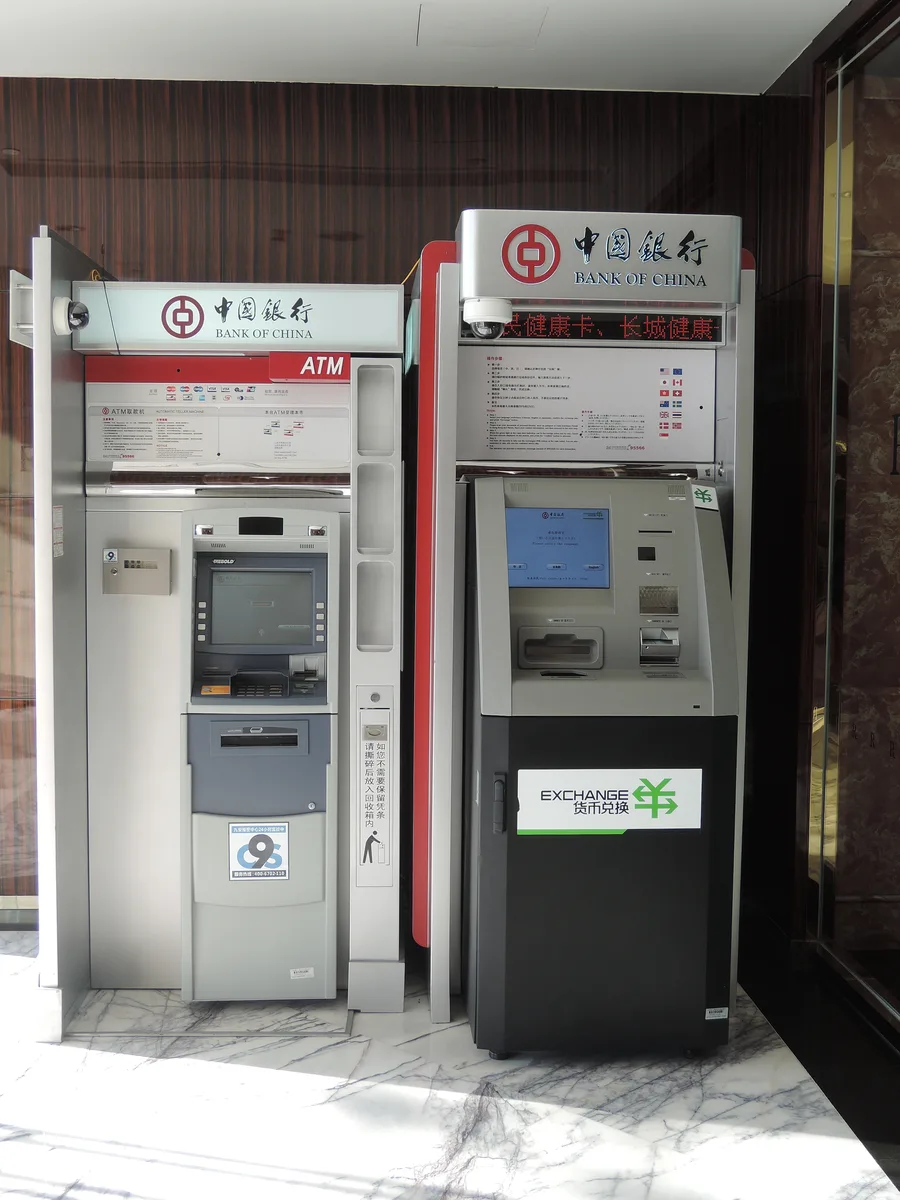

Cash is the layer that works with no signal and no battery. It is not a claim that every merchant prefers notes, and it is not a claim that every merchant must accept them in every situation. Keep it for the moments the other two layers miss.
What can go wrong — and what to do instead
Most of these fail at home, where you can still fix them. None of them means the trip cannot be paid for, if the other layers are real and not theoretical.
The card will not link. Try the other app before you decide mobile payment is impossible. A Visa that Alipay refuses may still sit in Weixin Pay, or the reverse. If both refuse, you still have the physical card and cash. Call the issuer while you are on your home network and ask whether mainland wallet charges are blocked.
The bank’s own check fails. Issuers often decline a first foreign charge or a first wallet link until you confirm it. Know how to reach the issuer if a payment is blocked, and keep a way to confirm the charge before you start. If a code never arrives, the problem may be the bank, not Alipay or WeChat.
The text message never comes. Both apps rely on a number that can receive SMS. Do the signup on that number, at home. Do not assume a new eSIM will receive the code for an account you created on a different SIM.
The shop cannot take that method. Ask once, then switch layers. Wallet declined, try the card if you see its logo. Card declined, use cash. You are not negotiating a principle. You are buying the thing in front of you.
The phone has no data, or no battery. This is why cash and the physical card are in a pocket, not in the suitcase, and why the hotel address is in a screenshot. A power bank matters as much as a second app.
Set up two of the three layers before you fly, and know where the third comes from on the day you land. Failures happen. They are not the normal outcome of a setup you have already tested.
Set up your payments before you fly
Do this while your home number still receives codes and your bank still answers in daytime hours where you live.
- Install Alipay, WeChat, or both.
- Register and sign in on the number that will receive texts in China, or confirm that roaming will deliver those texts.
- Complete the identity step the app actually asks for. For most visitors that is a passport.
- Link an eligible international card and stop when the app shows it as ready.
- If the card is refused, try the other app or another card before you leave.
- Know how to reach the card issuer from abroad if a payment is blocked.
- Pack the physical card where you can reach it without unpacking.
- Plan a small RMB backup, or know which airport counter or ATM you will use. You do not need to carry anything close to the 20,000 RMB crossing limit.
- Leave home with at least two of the three layers tested. Do not land with a single method you have never tried.
Once those are done, paying for the ordinary parts of the day is a solved problem. You can spend your attention on the trip.