Start with the simplest way to ride
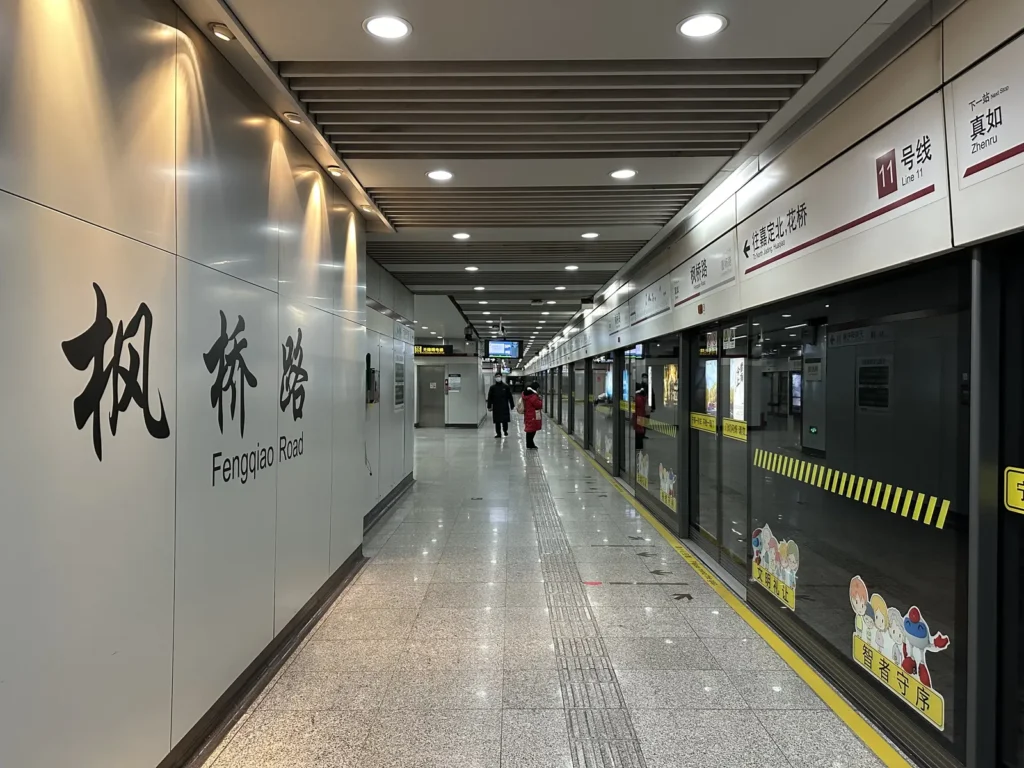
Photo: Kmchang28 / Wikimedia Commons / CC BY-SA 4.0.

A first metro ride in China is a station, a way to pay, and a direction. If the city you are in offers its metro code through Alipay, start there. A single-journey ticket from the machine or the service counter is the fallback. Once you are through the gate, the ride is the line, the direction, the transfer, and the exit. You do not need a local transit app for each city before that first trip. When the metro is the right tool, and when a car is the kinder one, is in getting around China.
Not every Chinese city has a metro, and the cities that do are not one system. The useful default is still small. Where Alipay can show a metro code for the city you are standing in, use that for a repeat ride. Where it cannot, buy one ticket for one ride. If the code will not open and the machine will not sell, the staffed counter is part of the station, not a last resort you have failed into.
A direct tap with an overseas bank card is a third door, and only where that city’s system has built it. Beijing’s network and Shanghai’s metro both offer a version of it. The cards and the conditions are local. Seeing a sign for your card at this gate is a reason to use it. A card that worked in the last city is not a reason to expect the next gate to behave the same way.
If Alipay already works on your phone, stop there. Do not add the metro operator’s app, a transit-card app, and a second wallet “just in case.” Fewer tools is the better setup when one of them already gets you through the gate. Which apps a first trip actually needs is in essential apps.
Set up the Alipay transport code before the gate
Current national guidance for foreign travelers uses Alipay as the example, and it is city by city. Open Alipay, choose Transport, select the city, and finish the identity check the screen asks for. You then get a metro QR code. You have that code scanned to enter and again to leave. There is no single code for every metro in the country. A code from the last city can sit in the app and still be the wrong one for this gate.
The same guidance describes a bus code as its own step after you select the city. Some city screens put metro and bus side by side. One of those choices may cover more than its label, and the next city may not. Read what the selected city says the code covers. Do not assume a metro code works on a bus, or the other way around.
Show the transport code, not a payment code. A payment QR is how you pay a shop. A transport QR is how this gate knows you have a ride. If the screen offers both, the reader at the metro gate wants the transport one.
The local transit code uses a payment channel authorized through Alipay. International visitors can link supported international cards in the app. How that linking works is in how to pay in China. Confirm that this city’s transit product accepts the channel you have before you rely on the code. A card that already pays somewhere else in Alipay is not, by itself, proof that this code will charge it, and it is not proof the gate will tap that card. If the transport screen asks you to authorize payment before it will show a code, do that while you still have a table, not while a queue is waiting on the reader.
The code lives on the phone. Sort the connection and the battery before the station. A gate is a bad place to discover that Alipay will not open. How to have usable data in China is in internet in China. This page will not claim that every scan on every system needs a live connection. If the code will not load, treat that as a reason to buy a ticket, not as a reason to keep refreshing in the doorway.
Buying a single-journey ticket instead
A single-journey ticket is the ride that does not depend on the code. National guidance says foreign travelers can buy one at the station ticket office or at a self-service machine. It lists RMB cash, mobile payment, and Chinese or foreign bank cards among metro payment methods. That list is not a promise that every machine takes every method. Follow the payment methods shown on that machine, or ask the service counter.
Cash is still a real way to buy the ticket. It is not a method you should assume has disappeared. Accepted notes can differ by machine, and so can change. This page will not publish a national list of denominations. If you are carrying cash for the metro, smaller notes are easier to spend than one large one, and the counter can do what the machine will not.
Use the ticket when you only need one or two rides, when the code will not activate, when the phone has no usable data, or when you simply prefer a ticket. A local stored-value transit pass can make sense for someone riding repeatedly, but purchase and ID requirements are city-specific. It is not the setup for a first afternoon.
If you want a physical ticket as a small souvenir, check what that city issues before you buy one. There is no nationwide rule that you may keep it. In Shanghai, a traditional IC single ticket is collected at the exit, while a paper QR single ticket is scanned at entry and exit and is not collected. A ticket the gate is built to take is not a souvenir. A ticket the gate only scans might be. Ask, or watch what the exit does with the ticket ahead of you.
Find the line and the direction before you go downstairs
Line 2 is not enough. You also need the direction.
Search the station name, then confirm three things before you commit to an entrance: the line, the station, and which entrance you are walking toward. A large station can have entrances on opposite sides of a road. The Chinese name is worth keeping. If an English search is ambiguous, the Chinese name is the one the signs and the ticket machine share.
The ride itself is a line, a direction, and a destination station. The direction is usually the station at the end of the line, not the stop you want. A platform labeled with a far-off name is pointing that way. Your station should appear in the list of stops beyond the one you are at. If it does not, you are looking at the other direction.
Major visitor cities often show station names in English as well as Chinese. The layout is not the same from one system to the next, and a smaller system may not match the city you just left. Read the line number or the line name, the direction, and the next stations on the platform in front of you. A map screenshot from the hotel is a plan. The sign on this platform is the train.
Getting through the gate and onto the train
Many stations ask you to put bags through a scanner before the paid area. Allow a little extra time to move through the station, especially with a suitcase or at a busy hour. This page will not turn that check into a list of banned items. If staff ask to inspect a bag, follow their instructions.
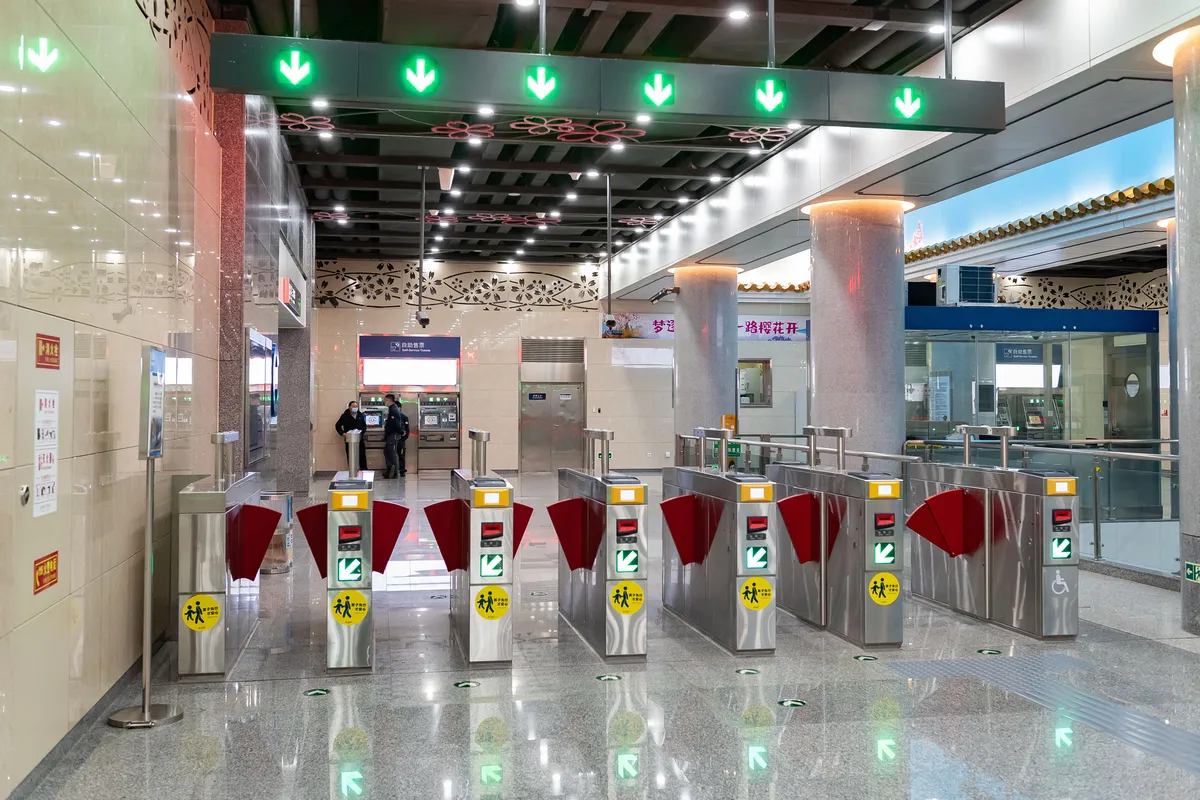
At the gate, match the thing in your hand to the reader.
.jpg)
For a code, open the active transport QR for this city and hold it to the metro reader. A code for another city, a bus code, or a shop-payment code can look similar and still do nothing useful here. For a ticket, use it the way that gate is built: insert, tap, or scan. The mark on the gate is the instruction. A paper ticket and a plastic token are not the same object, even when both were sold as a single ride.
For a bank card, tap only where the station says that network is accepted, and use the same card to leave. Beijing’s metro supports contactless payment at the fare gates across its network with China UnionPay, Mastercard, Visa, JCB, and American Express, without buying a ticket or downloading another app. Shanghai’s metro also accepts eligible contactless cards at the gate, and it sets its own conditions, including a small-payment authorization on the card. If the sign at this station names your card, the tap can be simpler than a new code. If it does not, buy the ticket. Do not tour the country tapping a Visa on every gate.
Leave with the same code, ticket, or card you used to enter, unless staff tell you otherwise. Mixing two phones, or a code on the way in and a ticket on the way out, is how a finished ride becomes a conversation at the exit.
Changing lines without leaving the system
For an ordinary interchange, follow the transfer signs rather than the exit signs. The word to look for is Transfer, or 换乘, plus the number or name of the next line. You are changing trains inside a station you have already paid to enter. The exit is a different decision, and it ends the ride.
That is the ordinary case. It is not a promise that every connection stays inside the gates. Some systems have a transfer that sends you out and back in. A single-journey ticket often will not cover that second entry. In Shanghai, neither the IC single ticket nor the paper QR single ticket can be used for an out-of-station transfer. If the signs point outside, ask before you walk through the exit, or be ready to pay again.
On the next platform, repeat the direction check. The new line has its own two ends. The terminus you just used belongs to the line you left.
The exit number matters more than it looks
The station name gets you underground. The exit number gets you to the street you actually need.
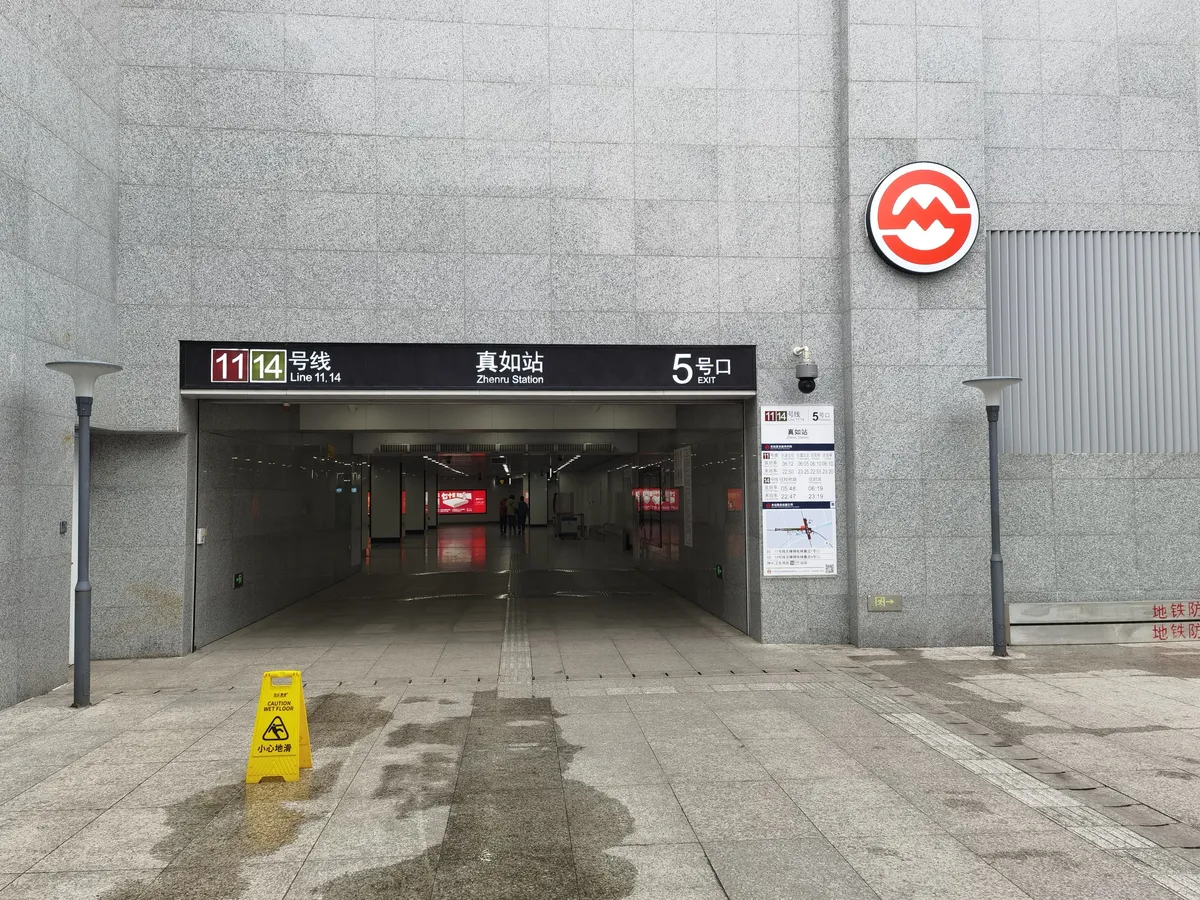

A large station can have exits on different sides of a major road, into different blocks, or into different doors of the same mall. The attraction can be a short walk from one letter and a long one from another. If a map or an app gives you Exit A, or B, or C, follow that label. Check it before you leave the platform, while the concourse signs are still a choice rather than a corridor you have already walked.
A correct station with the wrong exit can still cost you a long walk, and sometimes a road you cannot cross where you hoped. This page will not invent how many exits a station has. Count the ones on the sign in front of you. When you come back, the entrance closest to where you are standing is the one to use, which may not be the exit you left by.
What about buses?
Metro plus a walk is enough for many visitor days. You do not have to learn the bus network because it exists.
A bus becomes useful when the metro leaves a last stretch, when the place you want sits between stations, or when one direct bus is genuinely simpler than a transfer and a walk. It is a poor project for the morning you land, and a poor reason to skip a metro that already covers the trip.
If you do take one, start from the app you already have. National guidance says foreign travelers can pay a bus fare with RMB cash, a bus card, or Alipay. The Alipay example is the same shape as the metro: Transport, then the city, then an identity check, then a code for buses. In the national example, that code is scanned when you board and when you get off. Local buses do not all charge that way. Some are a flat fare. Some charge by distance. Follow the instruction on the code you opened and on the bus you are boarding. Do not treat “scan on and scan off” as a rule for every bus in China.
Check that the code is the one for buses. A metro code is not a bus fare, even in a city where another product happens to cover both. Cash remains a real fallback. The same national guidance tells cash users to prepare small change in advance. A bus may not be able to break a large note, and it may not give change at all. Coins and small notes are the practical form of that advice. A stored bus card from a company office, paid in cash or through Alipay or WeChat, is for someone staying long enough to make the errand worth it. It is not the first ride.
What if the QR code, ticket or gate does not work?
Go to the service counter. A staffed window is how a station sells the ride when the phone and the machine will not.
If the transport code will not activate, check the city first. The wrong city is a common reason for a code that looks ready and does nothing at this gate. If the identity check or the payment authorization is unfinished, finish it away from the reader, or abandon it and buy a ticket. If the code fails twice, step out of the gate rather than debugging the phone in the doorway. The queue behind you is not the place to compare menus.
A failed charge is an Alipay problem or a card problem, depending on which door you used. The gate will not explain which. The counter can sell you a ticket while you sort the account later. If a machine rejects cash or a card, the next machine is worth one try. After that, the counter is faster than a tour of the hall.
A ticket or a card that will not open the gate is the same move. Do not keep tapping a card the sign does not name. Do not assume a ticket from another city’s system will work here. Show the ticket to staff. If you have already entered on the wrong line, the next station is usually where you turn around. Read the direction again before you board the return train. If the line is unfamiliar, ask. Riding to the far terminus to “see” is how a short mistake becomes the afternoon.
Make the first metro ride simple
Set up one way to pay before you go down. If this city offers a metro code in Alipay, that is the one. If it does not, one single-journey ticket is enough. A card tap is for the station that posts your card, not for the country.
Then learn the ride, not the network. You need the line, the direction, and the exit number. A transfer follows the transfer signs. A bus can wait until the metro and a walk stop being enough.
You need a code or a ticket that this gate will take, a train going toward the right end of the line, and an exit that matches the street. The counter is there when the first of those fails. That is the whole first ride.