Being close does not make them one destination
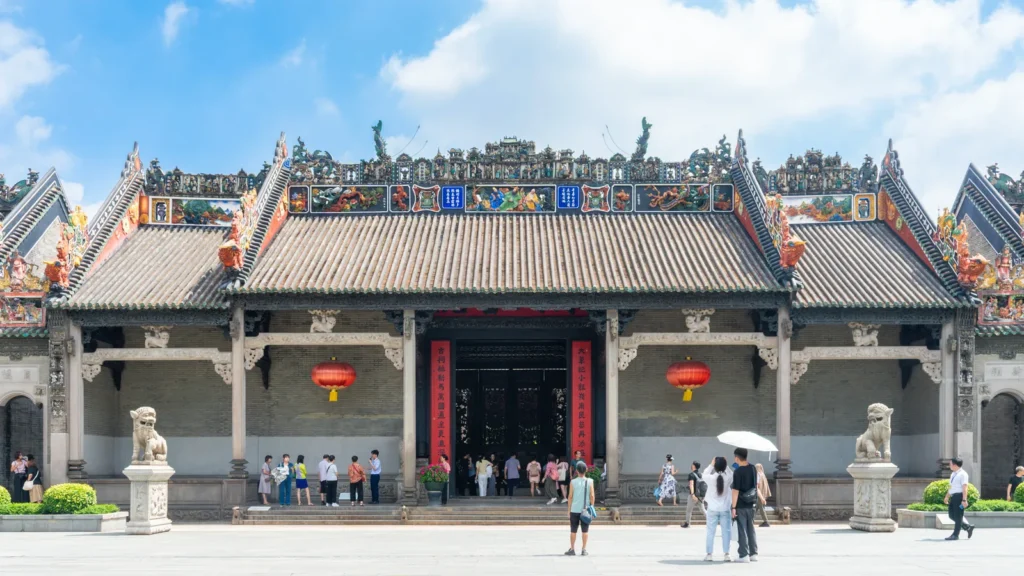
Photo: Shujianyang / Wikimedia Commons / CC BY-SA 4.0.

Guangzhou and Shenzhen are an unusually easy pair to put on the same trip. The intercity move is relatively contained, which is why they show up together so often.
Proximity answers whether the cities can fit. It does not answer whether you should sleep in both. This page is about that second question. The train makes the move easy. It does not decide what the move is for.
A Guangzhou and Shenzhen itinerary can be two bases, one base with a day out, or one city and a deliberate decision to leave the other off. Those are different trips.
Guangzhou and Shenzhen do different jobs
Do not sort them into an old city and a new one. Guangzhou has a major modern center. Shenzhen has earlier commercial districts as well as its newer skyline. The useful difference is what a short first visit is built around.
Guangzhou’s first look is older streets and the river, with meals as part of the day rather than a gap in it. Liwan, including the arcade streets around Enning Road, is one job. Shamian, nearby, is a different historical layer, not a substitute for those streets. The Pearl River and the newer axis around Zhujiang New Town are another part of the same city. How to hold that shape is in the Guangzhou travel guide.
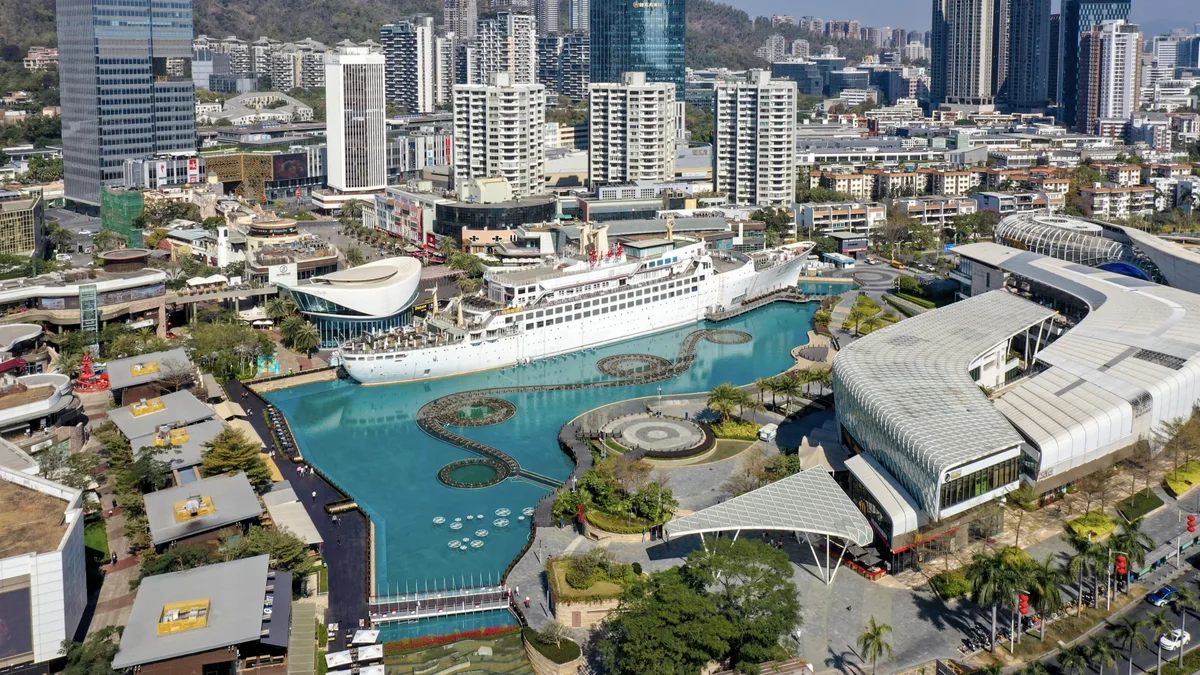

Shenzhen’s first look is a newer urban story, and it is not one neighborhood. Futian is the civic and business center, with Lianhua Hill as a view back over that skyline rather than a separate excursion. Nanshan, Shenzhen Bay, Houhai, and Shekou are the waterfront side, and they are not one stroll. The Shenzhen travel guide is where a first visit chooses a side and stays with it.
Use two bases when you want both cities as cities
Two bases make sense when both cities are stays: Liwan and a meal that is allowed to take time in Guangzhou, an evening on the Pearl River, and in Shenzhen a block in Futian or Nanshan plus time on the waterfront, with an evening that is not already aimed at a train back.
A day trip keeps one hotel and creates a return over the same corridor. Changing base once means a checkout and a check-in, and it removes that return. Neither is automatically the faster day. A hotel change is a cost. So is going back. Which cost you are paying is the question of whether the second city has earned a base, in how many cities you should visit in China.
Use one base when the second city has one job
A day trip is reasonable when the second city is in the plan for one purpose: a meeting, one district, an event, a shopping errand, or one urban experience you chose on purpose. This page does not assign that outing to Guangzhou or to Shenzhen. The city you sleep in is the one with the larger job.
If the second city has one job, you may not need a second hotel. If that job grows an evening, a second neighborhood, and a morning after, it has stopped being one job.
Do not confuse the train ride with the transfer
The ride is the middle of the move. The transfer is the hotel, the station, the station process, the train, the arrival station, and then the next hotel or the place you actually came for.
Both cities have more than one railway station. A short intercity ride can still leave a long local trip if the station on your ticket is far from the part of the city you actually want. Check the departure station, the arrival station, and the service on your date. What the rail journey asks once you are at the right station is in China high-speed rail. Which kind of move fits the distance sits in getting around China.
Do not commute between the cities just because you can
If you want real time in both cities across more than one day, keeping a single hotel and crossing back and forth is the habit an easy train creates. Each crossing is still station access, waiting, the train, the exit, and local transport on the other side.
One easy transfer does not make repeated transfers free. Cross once when you change base, or once out and once back when the second city has one job. Do not commute.
Keep the route geographically compact
This pair stays in southern China. It gives two different major-city stays without a long jump out of the region. That is the use of the proximity: a southern trip that does not have to become a national list.
This route does not need to grow beyond these two cities. Another city nearby is a new decision, with its own reason and its own transfer. It does not belong simply because the map looks small.
Extra days can stay inside either city
An extra day does not have to become another city. In Guangzhou it can be a slower walk in Liwan, another meal, more time on the river, or one other part of the city you already chose. In Shenzhen it can be more of Nanshan or Shekou, another stretch of waterfront, or a different district you did not fold into the first day.
How calendar days differ from time you can use is in how many days you need in China.
Who this route is for
This route suits someone who wants southern China, two contrasting large-city stays, a relatively contained move between them, Cantonese streets and food in Guangzhou, and Shenzhen’s newer center and waterfront, without a cross-country transfer.
It fits less well when the trip is very short, when only one city is actually interesting, when the second city is there because the train looks easy, or when the trip is already carrying too many bases.
Close enough to combine, different enough to choose
Guangzhou and Shenzhen are easy to combine because the move between them is relatively contained. That convenience matters only after both cities have earned a place.
If both are real parts of the trip, two bases can be cleaner than commuting between them. If one city is only an optional extra, being nearby is not a reason to add it. Use the short move to make the trip simpler, not to make the list longer.