Start with these five things

Photo: 颐园居 / Wikimedia Commons / CC BY-SA 4.0. Terminal 3 at Beijing Capital International Airport.

A first trip gets difficult when ordinary systems are left until the airport. Finish five preparations while you still have your home phone number, your own internet, and time to fix what fails.
- Entry requirements. Your passport decides whether you need a visa, a short visa-free stay, or a transit permission that is narrower than a holiday. A rule you read about someone else’s nationality is not your rule.
- Payments. In cities, everyday purchases are usually made by scanning a code. Set up one mobile option before you fly, and keep a physical card plus some RMB cash behind it.
- Internet access. Choose roaming, a travel eSIM, or a local SIM before you are outside arrivals with no signal and no map.
- Essential apps. Download and sign in to the few apps that cover payment, maps, translation, a ride, and the people who need to reach you.
- An arrival plan. Save the hotel name and address, including in Chinese, and know how you will get there from the airport.
If those five are done, you can learn everything else after you land. If they are not, more sightseeing research will not help you pay for water or show a driver where you are staying.
Check how you can enter China
Start with your passport and the reason you are traveling. A permission that covers tourism does not cover work, study, or journalism. Those activities still need the proper visa, even when a short stay for other purposes does not.
Three arrangements get treated as the same thing. They are not.
A visa is permission you obtain before travel, when your passport or your purpose requires it.
Visa-free entry exists for some ordinary passports. Where it applies, you can make a short stay for purposes such as tourism, business, or visiting without obtaining a visa in advance. Which passports are included is an official list, and that list changes. It is not a rule for every traveler.
Visa-free transit is a separate permission for people passing through China on the way to a third country or region. It usually depends on an onward ticket, and it limits where you can go and how long you can stay. Passing through is not the same thing as entering for a holiday. Some places also have narrower regional rules that do not cover a journey through the rest of the country.
The tourist version of that choice — a visa, visa-free entry, or visa-free transit — is set out in the entry requirements for your trip.
Before you book travel you cannot change, read the current rule for your passport. The National Immigration Administration publishes the visa-free entry list, and transit is explained separately. You can also ask the Chinese embassy or consulate responsible for you. If the rule is not clear for your passport and purpose of travel, confirm it with that embassy or consulate before you book non-refundable travel.
Set up a way to pay before you arrive
In Chinese cities, the ordinary way to pay for a meal, a metro ride, or a ticket is to scan a QR code. Cash has not disappeared, and a foreign bank card is not useless. If you arrive with only a card you have never tried, small purchases will be slower than they need to be.
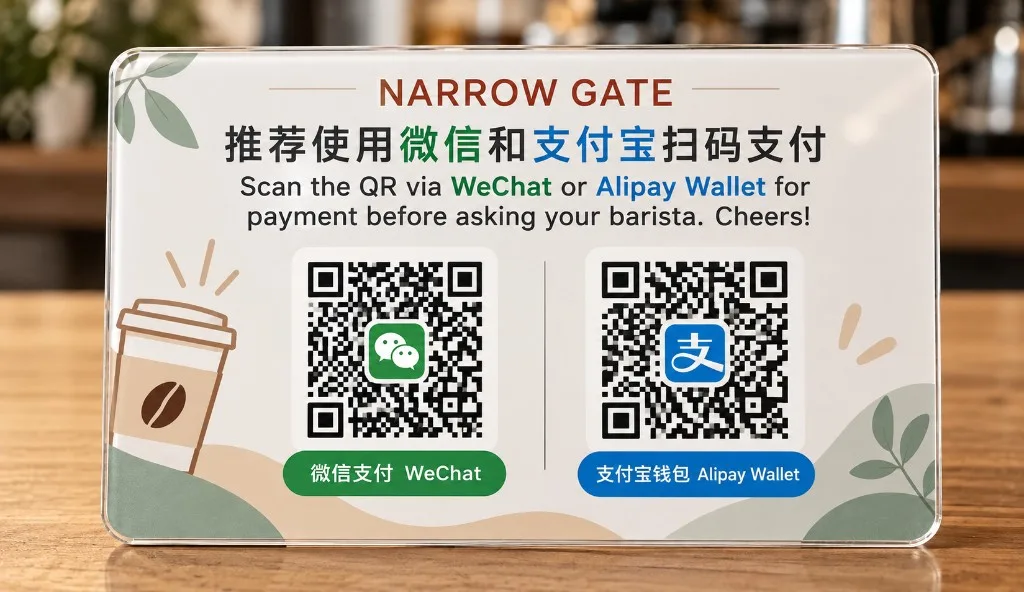
Set up one mobile option before you fly. Keep a physical card and some RMB cash behind it. The practical order is covered in paying in China.
Mobile payment. Alipay and Weixin Pay, the payment service inside WeChat, let many visitors pay merchants in the mainland by linking an eligible card issued outside China. You do not need a Chinese bank account for that. Major cards, including Visa and Mastercard, can often be linked. The app still accepts or refuses the specific card you hold, so finish this while you can still deal with a refusal. Weixin Pay accepts a passport for identity checks, and an overseas mobile number is enough when it can receive a text message.
Do the setup at home. Download the app, create the account, link the card, and confirm the verification code arrives. A failure at your kitchen table is easy to fix. A failure at a hotel desk, with no signal, is not.
A physical card. Carry one as well. Major hotels and major tourist sites are expected to take overseas cards. A small restaurant or a taxi may not have a terminal that accepts yours. Look for the card logo, and tell your bank you are traveling so the first charge is not blocked.
RMB cash. Cash is the backup when a code or a terminal fails. You can exchange at a bank or licensed counter, withdraw at an ATM that shows your card network, or bring notes with you. The published personal limit is 20,000 RMB into or out of the country on a single crossing. Take smaller notes as well as larger ones. A single large note is awkward when someone cannot make change.
For an ordinary trip, one way to scan a code is enough to make the days work, as long as a card or cash can still pay if the phone cannot.
Decide how you’ll get online
Choose the connection before you fly. The expensive version of this problem is standing outside arrivals, watching your usual apps fail, and buying the first thing a stranger offers.
International roaming keeps your home number. On many plans it also keeps a network path you already understand, which is why it is the calmest first day and often the most expensive second week. Ask your carrier what a day in mainland China costs, and whether a hotspot is included.
A travel eSIM is usually installed at home, on Wi-Fi, before you leave. Use a provider you can actually reach if activation fails. What matters is that the eSIM is installed, you know which line to switch on after landing, and you have not deleted your home SIM to do it.
A local SIM is the mainland option. Foreign nationals can apply for a phone card at a telecom operator’s own business hall with a passport or a Foreign Permanent Resident ID Card. China Telecom, China Mobile, China Unicom, and China Broadnet all do this. Expect a plan with a limited amount of data. Some airports have a counter. That is not a promise at every terminal, and it is a poor moment to discover that the passport page you need is in the bag you checked.
The difference that changes the day: a local SIM puts you on a mainland network. Sites and apps you use at home may not open. Roaming, and many international travel eSIMs, often stay on a route arranged outside that network, which is why people use them for the apps they already depend on. Test the result on your own phone before you rely on it.
How to choose among roaming, a travel eSIM, a local SIM, and Wi-Fi is set out in internet on your phone in mainland China.
Hotel and airport Wi-Fi is a spare key. Save the hotel confirmation somewhere you can open with no signal at all.
Download the apps you’ll actually need
You do not need a list of twenty apps. You need a few categories signed in before the cabin door closes. Several of them send a code to your phone number, and that code is much more likely to arrive while you are still at home.
Payments. Alipay and WeChat. WeChat is both a messenger widely used in China and the door to Weixin Pay. Install both if you can. Finish the account, and link a card to at least one of them. If the code never arrives, fix that at home, not after you land.
Maps. Save the hotel as a pin, and keep the address in Chinese as well as English. A map that opens on your home Wi-Fi may not be the one that opens on a mainland SIM. Download an offline area if the app allows it. A driver can use a Chinese address. A neighborhood description is how people end up in the wrong district.
Translation. One app, already tested. Download the language pack so a dead signal does not leave you with an empty screen in a taxi.
Transport. Ride-hailing and train tickets live in local apps, and often inside the same payment apps. You do not need to master rail ticketing before this trip. How trains, flights, the metro, and taxis fit a first trip is in getting around China. You do need a way to pay for the ride from the airport, which is why payment and a working phone come first.
Communication. Agree with anyone meeting you which app will reach you on the first day. The app your family uses at home may be quiet on a local SIM. Leave the hotel’s phone number in the confirmation as well.
Sign in at home, while you can still receive the code.
Which of those to install, and what you can skip, is in essential apps for a trip to China.
Know what your first hour in China will look like
The first hour is a sequence, not a sightseeing plan.
You land and join the immigration queue with your passport, and with whatever arrival form that airport is using. Have the first hotel’s address readable, in Chinese if you saved it. Answer the ordinary questions plainly. If you are on a transit permission, the onward ticket is part of that conversation, not a document you find later.
You collect your bags. This is when the phone either works or it does not. If you chose roaming or an eSIM, switch it on before you need a map. If you planned to buy a local SIM, this queue should be one you expected.
You will want to pay for something small: water, a SIM, a taxi. This is why the card is already linked, and why a little cash is in a pocket rather than in a suitcase.
You leave the terminal on the transfer you already chose. That might be the taxi rank, a car you booked, an airport train, or a person you know. Show the hotel name and address from your phone, and keep a screenshot that does not need a signal. Do not invent the rest of the trip at the curb.
You reach the hotel and the passport comes out again. If payment, a working phone, and the hotel details were ready before the flight, this hour is mostly waiting in lines.
Keep your passport and key information accessible
Carry the passport you entered with. You will be asked for it more than once.
At a hotel, that request is normal. Hotels register foreign guests and send that registration to the local public security authority. If you stay somewhere that is not a hotel, you or your host generally must register with the public security organ within 24 hours of arrival. A hotel is the simpler of the two, because the hotel does the filing. Have the passport ready. Do not pack it in the bag you checked.
Keep these where you can open them with no signal:
- the hotel name and street address, in Chinese and in English
- the booking confirmation
- a copy of the passport photo page, stored separately from the passport
- the flight out, or the onward ticket if you entered on a transit permission
- a phone number for the place you are staying
If your permission is transit, the onward ticket with a confirmed seat is part of the permission. Do not treat that file as optional.
If you are carrying RMB cash, the published personal limit is 20,000 RMB into or out of the country per person, per crossing. For medication, professional equipment, or goods you plan to sell, check the rule that applies to you before you fly.
Don’t try to solve all of China in one trip
China is large enough that a city which looks close on a map can still cost most of a day. The timetable is the short part. The day also includes checkout, traffic to the station, the station itself, and arriving in a neighborhood you do not know. Adding a place is a trade. It is not a free extra on top of a trip that was already full.

.jpg)
A first visit does not become more complete because the map has more pins. Two or three places, each stayed in long enough to arrive properly, will usually teach you more than a chain of one-night hotels. Who you are traveling with, where you land, and which place you would actually regret missing all change that. There is no single list of cities that fits every first trip.
Your pre-departure checklist
Do what applies to your passport. Skip nothing that does. Ignore a line that clearly does not.
- Confirm how you are allowed to enter, for your nationality and your purpose, on a current official page or with the Chinese embassy or consulate. If it is not clear, confirm it before you book non-refundable travel.
- Check that your passport covers the whole trip, and that you can show an onward ticket if you are using a transit permission.
- Install Alipay or WeChat, sign in, link an eligible card, and confirm the verification code arrives while your phone number still receives it.
- Pack a physical bank card, tell the bank you are traveling, and take a modest amount of RMB in smaller notes.
- Choose roaming, a travel eSIM, or a local SIM, and test whichever of those you can test before departure.
- Download the map, a translation app, and your payment apps, and sign in at home.
- Save the hotel name and address in Chinese and English, where you can open them offline.
- Store a copy of the passport photo page and the booking somewhere other than the suitcase.
- Decide the airport-to-hotel transfer, including how you will pay for it.
- Re-read anything specific to your passport or your route. A national headline is not your permission until it includes you.
Once the basics are set, China becomes much easier
Most of the worry before a first trip is not the place. It is the unfamiliar machinery: a visa question, a QR code, a phone that will not open the app you wanted. Those are preparation problems. You can finish them before you fly.
Once you know how you will enter, how you will pay, and how you will get online, the country is something you can actually look at. The button beside the title will keep a question with your notes, for a person to read later. You do not need a finished itinerary to use it.